
Childhood Asthma Symptoms: Why Nighttime Cough Shouldn’t Be Ignored
Childhood Asthma Symptoms: Why Night time Cough Shouldn’t Be Ignored
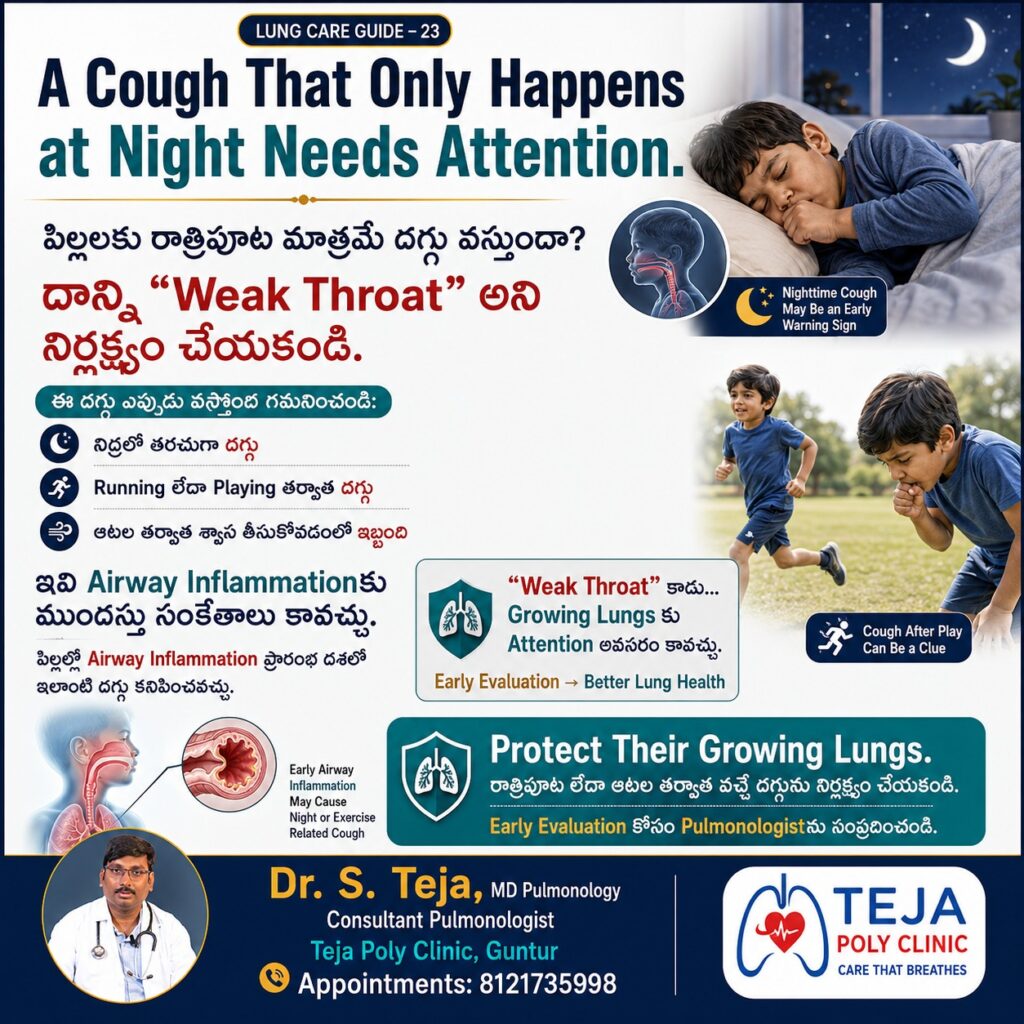
Every parent knows how worrying it can be to hear their child coughing in the middle of the night. Your child may seem completely fine during the day, but once they go to bed, a dry or persistent cough begins. Sometimes, the same cough appears after running, playing, or participating in sports.
Many parents assume that these symptoms are caused by a weak throat, dust allergy, a lingering cold, or a change in weather. But when coughing happens repeatedly at night or after physical activity, it may be one of the childhood asthma symptoms that deserves medical attention.
What Are the Common Childhood Asthma Symptoms?
Asthma is a condition in which the airways become inflamed and more sensitive. In children, symptoms can sometimes be subtle and may not always include the classic wheezing sound.
Common childhood asthma symptoms include:
Frequent coughing, especially at night
Coughing after running or playing
Wheezing or a whistling sound while breathing
Shortness of breath
Chest tightness or discomfort
Getting tired quickly during physical activity
Cough that becomes worse with cold air, dust, smoke, or strong smells
For some children, nighttime coughing may be one of the earliest or most noticeable symptoms.
Why Does Asthma Cause Coughing at Night?
Asthma symptoms can become more noticeable during sleep because airway inflammation and other physiological changes can contribute to increased airway sensitivity.
When a child lies down, mucus drainage, exposure to bedroom allergens, changes in airway function, and the body’s natural day-night hormonal rhythm may all contribute to coughing.
If your child repeatedly wakes up coughing, struggles to sleep because of coughing, or needs to sit up because of breathing discomfort, it is worth discussing these symptoms with a doctor.
Why Does Running Trigger Coughing?
Have you noticed your child coughing shortly after running, playing football, cycling, or participating in other activities?
Exercise increases breathing rate. During intense activity, children may breathe more quickly through their mouths, allowing cooler and drier air to reach the airways. In children with sensitive or inflamed airways, this can trigger temporary airway narrowing and coughing.
This is sometimes referred to as exercise-induced bronchoconstriction.
Importantly, coughing after exercise does not automatically mean a child has asthma. Other conditions can cause similar symptoms, which is why proper evaluation is important.
Don’t Wait for Wheezing
Many parents believe asthma is present only when they hear a loud wheezing sound. However, children can have asthma-related symptoms without obvious wheezing.
A persistent or recurring cough—particularly one that follows a pattern such as occurring at night, during exercise, or after exposure to specific triggers—should not simply be dismissed as a “weak throat.”
Early assessment can help identify the underlying cause and determine whether asthma, allergies, infection, or another respiratory condition is responsible.
When Should Parents Seek Medical Evaluation?
Consider speaking with a doctor if your child:
Frequently coughs during sleep
Develops a cough after running or playing
Has repeated episodes of breathlessness
Complains of chest tightness
Frequently wakes because of coughing
Avoids physical activities because breathing becomes difficult
Has recurring respiratory symptoms triggered by dust, smoke, pets, or weather changes
A medical evaluation may include a detailed history, physical examination, and age-appropriate breathing tests when possible.
Help Your Child Breathe, Sleep, and Play Better
Recognizing childhood asthma symptoms early can help parents seek appropriate care instead of repeatedly treating the cough as a simple cold or allergy.
Not every nighttime cough is asthma, but a cough that repeatedly appears during sleep or after exercise deserves attention—especially when accompanied by breathing difficulty, wheezing, or reduced activity.
If your child is experiencing recurring cough, nighttime symptoms, or breathing problems, consult a qualified respiratory specialist for proper evaluation.
For families looking for a Pulmonologist in Guntur, Teja Poly Clinic and Maternity Hospital provides respiratory evaluation and care for children with recurring cough and breathing-related concerns.
Don’t wait for symptoms to become severe. Early evaluation can help your child sleep peacefully, stay active, and enjoy everyday activities with confidence.