
Swollen Feet and Shortness of Breath: When These Symptoms Could Signal a Serious Heart or Lung Problem
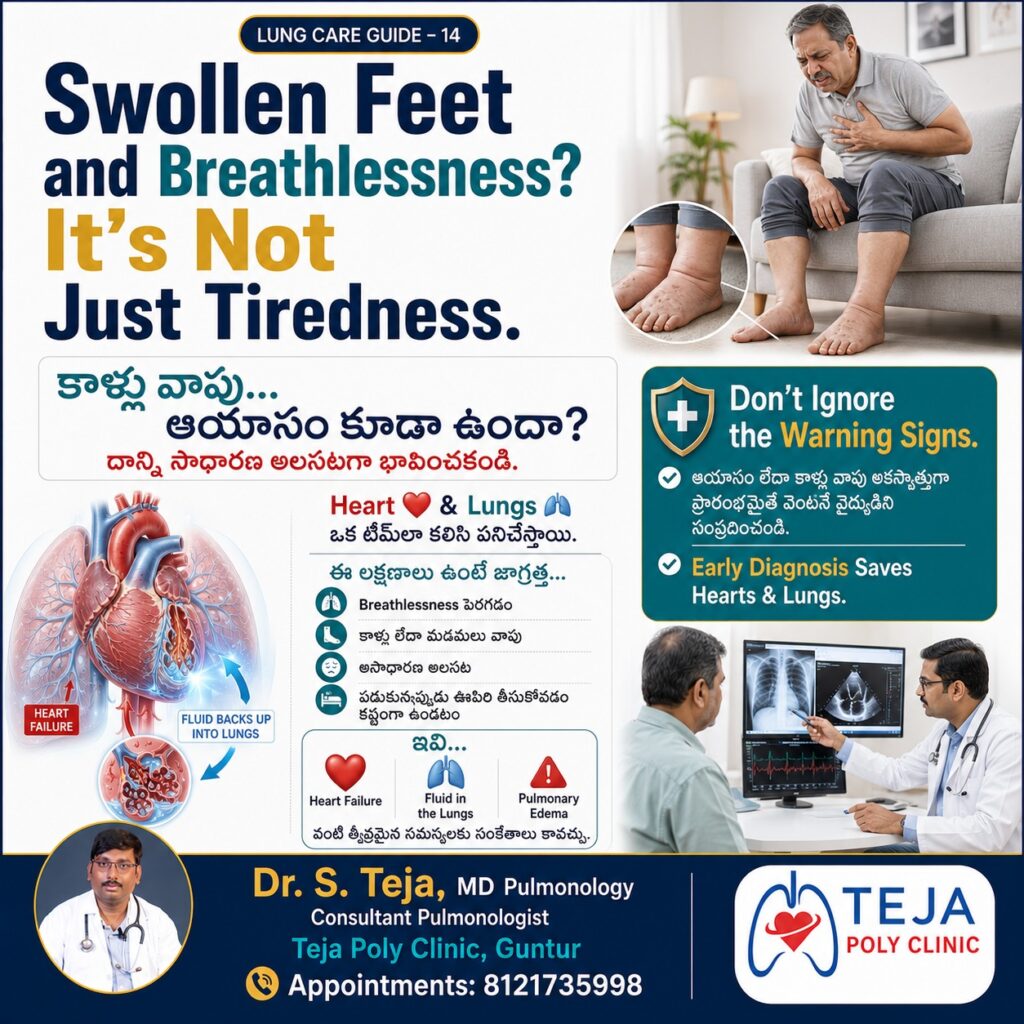
Swollen Feet and Shortness of Breath: When These Symptoms Could Signal a Serious Heart or Lung Problem
Many people dismiss swollen feet and shortness of breath as signs of tiredness, aging, or spending too much time on their feet. While these explanations may seem harmless, experiencing both symptoms together can sometimes indicate a serious underlying condition involving your heart or lungs. Recognizing these warning signs early can help prevent life-threatening complications.
If you notice persistent swelling in your ankles or feet along with difficulty breathing, it is important not to ignore them. Consulting a Pulmonologist in Guntur can help identify the root cause and ensure timely treatment.
Understanding the Connection Between Your Heart and Lungs
Your heart and lungs work together continuously to supply oxygen-rich blood throughout your body. The lungs oxygenate your blood, while the heart pumps it to every organ and tissue. When either organ is affected, the other often struggles to compensate.
This close relationship explains why swollen feet and shortness of breath frequently occur together. These symptoms may be your body’s way of warning that your cardiovascular or respiratory system is under stress.
Why Do Swollen Feet and Shortness of Breath Occur Together?
1. Heart Pumping Becomes Less Efficient
One of the most common causes is heart failure or reduced heart function. When the heart cannot pump blood effectively, blood begins to accumulate in the veins returning from the lower part of the body.
As pressure builds within these veins, fluid leaks into surrounding tissues, resulting in swelling of the feet, ankles, and lower legs. This condition is medically known as peripheral edema.
2. Fluid Builds Up in the Lungs
When the heart struggles to pump blood efficiently, fluid can also back up into the lungs. This fluid makes it difficult for the lungs to expand fully during breathing.
As a result, people may experience:
Shortness of breath during walking
Difficulty climbing stairs
Breathlessness while lying flat
Waking up suddenly at night gasping for air
Persistent tiredness
Ignoring these symptoms may allow the condition to worsen over time.
3. Chronic Lung Disease Can Affect the Heart
The relationship works both ways. Long-standing lung diseases such as COPD, severe asthma, pulmonary fibrosis, or pulmonary hypertension force the right side of the heart to work harder.
Over time, this increased workload may weaken the heart, leading to fluid retention and swollen feet. This is why evaluation by an experienced Pulmonologist in Guntur is essential whenever respiratory symptoms occur alongside leg swelling.
Other Symptoms You Should Never Ignore
If swollen feet and shortness of breath are accompanied by any of the following symptoms, seek medical attention immediately:
Persistent cough
Chest discomfort or chest pain
Rapid heartbeat
Extreme fatigue
Bluish lips or fingertips
Sudden weight gain due to fluid retention
Reduced ability to perform routine activities
These symptoms may indicate a serious heart or lung condition that requires prompt diagnosis and treatment.
Why Early Diagnosis Is Important
Many people assume swollen feet are caused by standing too long or that breathlessness is simply a consequence of getting older. While these can sometimes be harmless, persistent or worsening symptoms should never be ignored.
Early diagnosis allows doctors to identify the underlying problem before irreversible damage occurs. Depending on the cause, investigations may include:
Chest X-ray
Pulmonary function tests
ECG
Echocardiogram
Blood tests
CT scan of the chest
Oxygen level assessment
These evaluations help determine whether the symptoms originate from the heart, lungs, or another medical condition.
Lifestyle Measures That Support Heart and Lung Health
While treatment depends on the underlying diagnosis, adopting healthy lifestyle habits can improve both heart and lung function:
Avoid smoking and second-hand smoke.
Follow a balanced diet low in excess salt.
Maintain a healthy body weight.
Stay physically active as advised by your doctor.
Control blood pressure and diabetes.
Take prescribed medications regularly.
Seek medical advice promptly if symptoms worsen.
These simple measures can reduce the risk of complications and improve overall quality of life.
When Should You See a Pulmonologist?
If you experience persistent swollen feet and shortness of breath, do not assume they are simply signs of aging or fatigue. These symptoms may indicate heart failure, chronic lung disease, pulmonary hypertension, or other serious medical conditions.
Consulting an experienced Pulmonologist in Guntur can help determine the exact cause through a comprehensive clinical evaluation and appropriate investigations. Early diagnosis and timely treatment can prevent complications, improve breathing, reduce swelling, and protect both your heart and lungs.
Conclusion
Swollen feet and shortness of breath are more than everyday discomforts. They may be early warning signs that your heart and lungs are no longer working efficiently together. Ignoring these symptoms can delay treatment and increase the risk of severe complications.
If you or a loved one experiences persistent leg swelling along with breathlessness, schedule a consultation at Teja Poly Clinic and Maternity Hospital. Early evaluation and expert care can make a significant difference in protecting your long-term heart and lung health.