
AC Trap Health Risks Explained by a Pulmonologist in Guntur
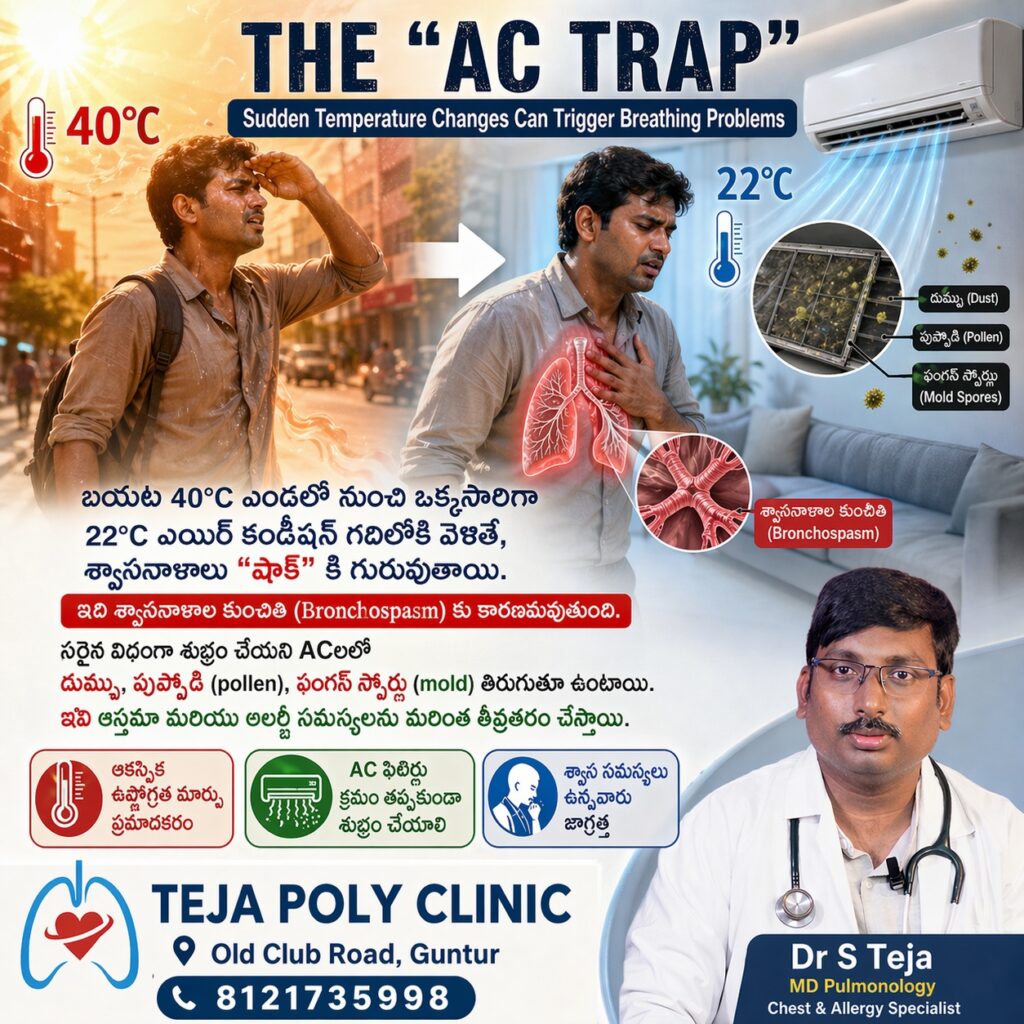
As a pulmonologist in Guntur with over 10 years of clinical experience, I often see a surge in patients during peak summer—not because of infections alone, but due to something far more overlooked: the AC trap. While air conditioning offers much-needed relief from scorching temperatures, improper use can quietly trigger a range of respiratory issues.
Let’s break down the AC trap health risks explained in a clear, practical way so you can stay cool without compromising your health.
What Is the “AC Trap”?
The AC trap refers to the chain reaction your body undergoes when exposed to sudden temperature changes and poorly maintained air conditioning systems. It’s not a disease—but it can mimic one, causing symptoms like:
Throat irritation
Nasal congestion
Dry cough
Headache and fatigue
Many patients assume it’s a viral infection, but in reality, it’s often a response to environmental stress.
1. Thermal Shock: The Hidden Stress on Your Airways
When you move from 40°C outdoor heat to a 20–22°C indoor environment, your respiratory system struggles to adapt quickly.
What happens inside your body?
Airway constriction: Cold air causes bronchial muscles to tighten, especially in people with asthma or allergies.
Dryness and irritation: AC air lacks humidity, drying out your throat and nasal lining.
Excess mucus production: Your body tries to protect itself, leading to a blocked or runny nose.
As a pulmonologist in Guntur, I frequently see patients with worsening asthma symptoms triggered purely by this sudden thermal shift.
2. Indoor Air Quality: The “Invisible Guests” in AC Systems
Another major part of AC trap health risks explained is poor maintenance of cooling systems.
If your AC hasn’t been cleaned regularly, it may circulate more than just cool air.
Common contaminants include:
Mold and fungi: Thrive in damp coils and ducts
Dust and pollen: Accumulate in clogged filters
Bacteria: Grow in stagnant water inside the unit
These particles are continuously blown into your breathing space, leading to:
Sinus irritation
Bronchial inflammation
Increased risk of respiratory infections
In my clinical practice, I’ve seen patients improve dramatically simply by servicing their AC units.
3. Who Is Most at Risk?
While anyone can fall into the AC trap, certain groups are more vulnerable:
Children
Elderly individuals
People with asthma or COPD
Those with frequent allergies
Office workers exposed to AC for long hours
If you belong to any of these groups, extra precautions are essential.
How to Avoid the AC Trap (Practical Tips)
You don’t need to give up your AC—just use it wisely.
1. Follow the “Buffer Zone” Method
Before entering a fully air-conditioned space, spend a few minutes in a shaded or fan-cooled area. This helps your body adjust gradually.
2. Maintain Your AC Regularly
Clean filters every 30–90 days
Schedule professional servicing periodically
Ensure proper drainage to avoid bacterial buildup
3. Control Humidity
AC units dry the air significantly. To prevent throat irritation:
Use a humidifier
Stay well hydrated
Keep indoor plants or a bowl of water nearby
4. Follow the Temperature Gap Rule
Avoid extreme contrasts. Ideally:
Keep indoor temperature 8–10°C lower than outdoor temperature
Avoid setting AC below 22°C for prolonged periods
5. Protect Your Airways
Drink warm water regularly
Avoid direct airflow on your face or chest
Use a light scarf if exposed for long durations
When Should You See a Pulmonologist?
If symptoms persist beyond a few days or worsen, consult a specialist. Warning signs include:
Recurrent throat infections
Severe nasal blockage
Early evaluation can prevent minor irritation from becoming a chronic respiratory issue.
The Bottom Line
The AC trap health risks explained are not meant to scare you—but to help you make smarter choices. Air conditioning is essential in cities like Guntur, where summer temperatures are extreme. However, balancing comfort with health is key.
As a Pulmonologist in Guntur, my advice is simple:
Respect the transition, maintain your environment, and listen to your body.
Stay cool—but stay healthy too.