
Air Cooler Side Effects on Lungs: What You Need to Know Before Using One

Air coolers are a popular and budget-friendly solution to beat the summer heat, especially in hot and dry climates. They are energy-efficient, eco-friendly, and cost much less than air conditioners. However, many people are unaware of the potential air cooler side effects on lungs, especially for those who suffer from asthma, allergies, sinus problems, or other respiratory conditions.
Before you decide to buy or use an air cooler regularly, it is important to understand how air coolers work and how they can affect your respiratory health.
How Air Coolers Affect Your Lungs
Air coolers work on the principle of evaporation. They pull hot air from the room and pass it through water-soaked cooling pads. The water evaporates and cools the air, which is then blown into the room. While this process cools the air, it also increases indoor humidity.
High humidity levels inside a poorly ventilated room can create the perfect environment for:
Mold
Mildew
Dust mites
Bacteria
These microorganisms can circulate in the air and enter your lungs, causing respiratory problems. This is one of the main air cooler side effects on lungs, particularly in people who already have breathing issues.
Common Air Cooler Side Effects on Lungs
If air coolers are not maintained properly, they may cause several respiratory problems such as:
Persistent cough
Wheezing
Shortness of breath
Allergies
Sinus infections
Asthma attacks
Fungal infections
Lung infections in sensitive individuals
Stagnant water in the air cooler tank can also become a breeding ground for bacteria. When contaminated air is circulated, it may lead to infections and allergic reactions.
How to Reduce Air Cooler Side Effects on Lungs
If you are using an air cooler, proper maintenance is very important to protect your lung health. Here are some essential precautions:
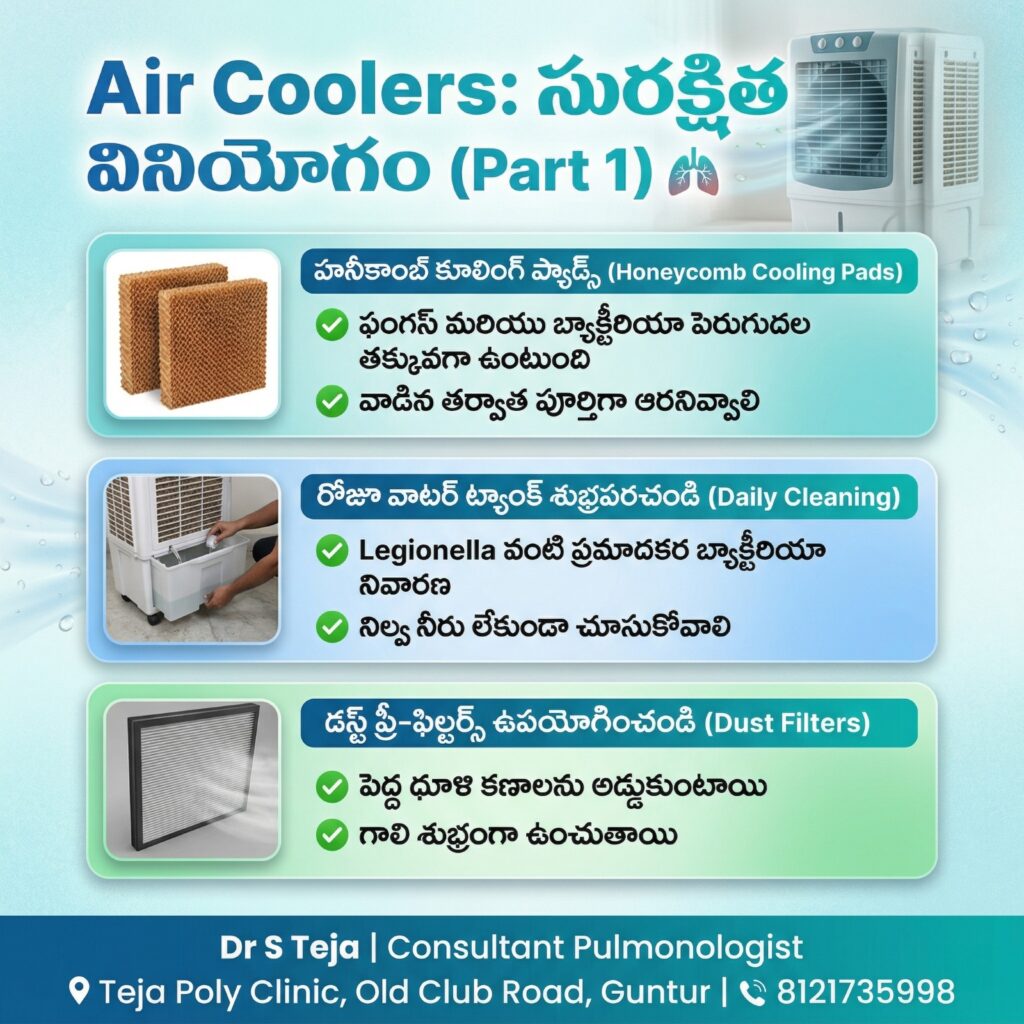
1. Use Honeycomb Cooling Pads
Traditional wood wool (khus) pads retain moisture for a long time and can develop fungus and bacteria. Honeycomb cooling pads are a better option because they are more durable and less likely to develop microbial growth.
Tip: Run the fan without water for 10–15 minutes before turning off the cooler to dry the pads completely. This helps prevent fungal growth and reduces air cooler side effects on lungs.
2. Clean the Water Tank Daily
Stagnant water can lead to bacterial growth and mosquito breeding. Always make sure the water tank is easy to open and clean.
Cleaning routine:
Drain old water daily
Scrub the tank weekly
Refill with fresh water
This simple habit can significantly reduce the risk of lung infections and allergies.
3. Use Dust Filters
Many air coolers pull dust and pollen from outside air. These particles get trapped in wet cooling pads and then circulate inside the room.
Choose an air cooler with:
Pre-filters
Dust filters
High-density mesh filters
This helps keep the air cleaner and reduces respiratory irritation.
The Golden Rule: Proper Ventilation
One of the biggest mistakes people make while using air coolers is keeping the room completely closed. Unlike air conditioners, air coolers require cross-ventilation.
Always keep:
One window open
One door or window slightly open for air exit
Without ventilation, humidity increases, and the room becomes damp. Damp environments promote mold growth, which is harmful to lungs. If you notice a musty smell or damp bedsheets, it means ventilation is poor and may increase air cooler side effects on lungs.
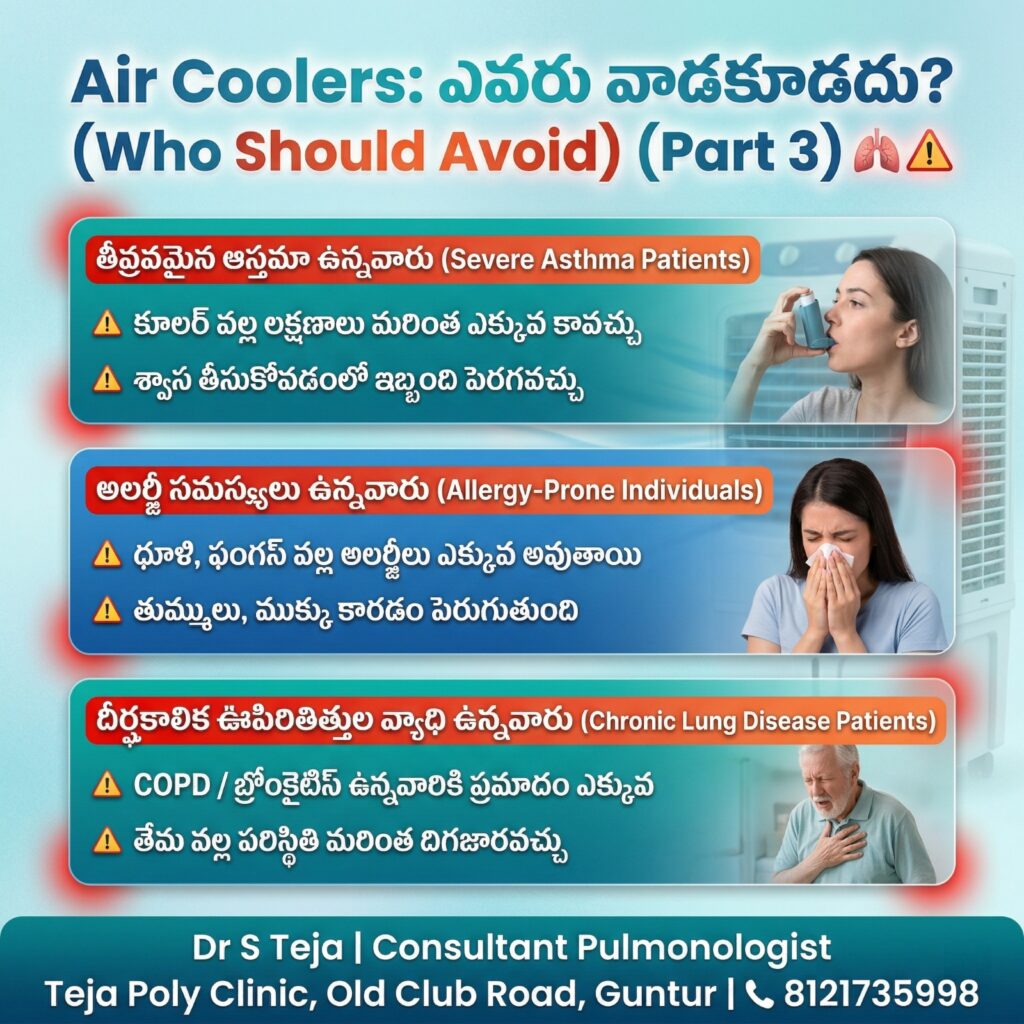
Who Should Avoid Air Coolers?
Air coolers are not suitable for everyone. The following people should be cautious:
Severe asthma patients
People with mold allergy
Chronic lung disease patients
People with weak immunity
Elderly individuals with breathing problems
For these individuals, using an air conditioner or a pedestal fan may be a safer option.
Who Can Benefit from Air Coolers?
Air coolers may actually help some people, such as:
People with dry skin
People with sinus dryness
People living in very dry climates
Mild allergy patients (with proper maintenance)
The added moisture can sometimes help reduce dryness in the nose and throat.
Final Thoughts
Understanding air cooler side effects on lungs is very important before using one regularly. Air coolers are not harmful by default, but poor maintenance, high humidity, and lack of ventilation can make them dangerous for respiratory health.
Bottom Line:
An air cooler can be safe if you:
Clean the tank daily
Use honeycomb pads
Use dust filters
Ensure cross-ventilation
Dry the pads before switching off
If you cannot maintain the cooler properly, it may be better to use an air conditioner or a fan to protect your lung health.
Your lungs need clean air, not just cool air.