
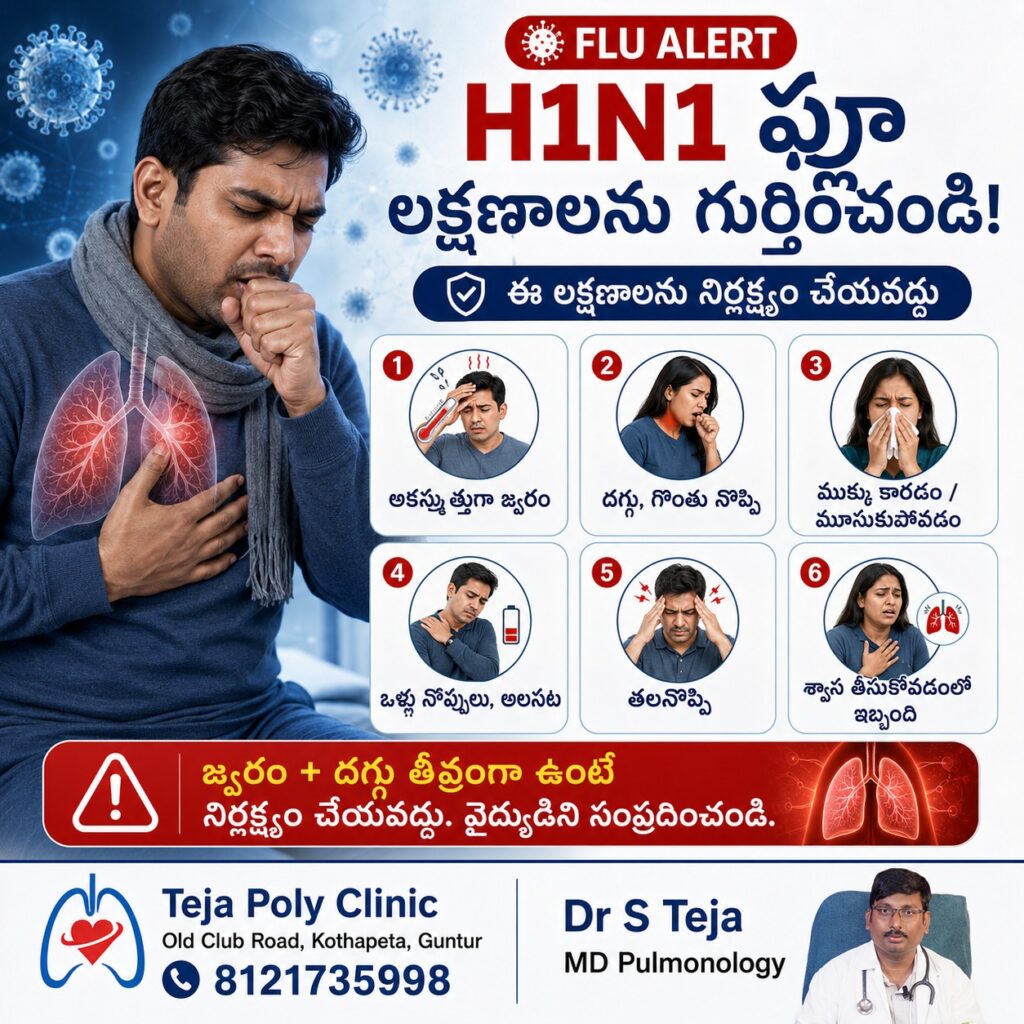
H1N1 Flu Symptoms: Signs, Warning Symptoms, Treatment and Prevention
H1N1 influenza, commonly known as swine flu, is a contagious respiratory infection caused by the influenza A virus. Understanding H1N1 flu symptoms can help you recognize the infection early and seek appropriate medical care when needed.
H1N1 can spread from person to person through respiratory droplets when an infected individual coughs, sneezes, or talks. It can also spread when people touch contaminated surfaces and then touch their nose, mouth, or eyes.
Common H1N1 Flu Symptoms
The H1N1 flu symptoms can be similar to those of seasonal influenza. Symptoms may develop suddenly and can vary from mild to severe.
Common symptoms include:
Fever or chills
Cough
Sore throat
Runny or blocked nose
Headache
Muscle and body aches
Extreme tiredness or weakness
Loss of appetite
Nausea or vomiting
Diarrhea, which may occur more commonly in children
Not everyone with H1N1 will experience all these symptoms. Some people may have mild symptoms, while others can develop complications affecting the respiratory system.
When Are H1N1 Flu Symptoms Serious?
Most healthy individuals recover from influenza with adequate rest, fluids, and appropriate medical guidance. However, H1N1 can sometimes cause serious respiratory complications, particularly in people who are at higher risk.
Seek prompt medical attention if you experience:
Difficulty breathing or shortness of breath
Chest pain or discomfort
Persistent or worsening fever
Severe weakness or unusual drowsiness
Confusion or difficulty staying awake
Symptoms that improve and then suddenly become worse
Signs of dehydration
Breathing difficulty should not be ignored, as it may indicate a more serious respiratory complication.
Who Is at Higher Risk of Complications?
Certain individuals may have a greater risk of developing complications from influenza. These may include young children, older adults, pregnant women, and people with certain chronic medical conditions.
People with respiratory conditions or weakened immune systems should be particularly attentive to worsening H1N1 flu symptoms and seek medical advice when necessary.
How Is H1N1 Flu Managed?
Treatment depends on the severity of symptoms, individual risk factors, and the doctor’s assessment. Rest, adequate fluid intake, and symptom management may be recommended for people with mild illness.
In some situations, a doctor may prescribe antiviral medication. Antiviral treatment is generally most beneficial when started early, particularly for people at higher risk of complications. Do not self-medicate; consult a qualified healthcare professional for appropriate treatment.
If you are experiencing persistent cough, breathing difficulty, or worsening flu-like symptoms, consulting a Pulmonologist in Guntur can help determine whether further respiratory evaluation is needed.
How Can You Prevent H1N1 Infection?
Simple precautions can reduce the risk of spreading influenza:
Wash your hands frequently with soap and water.
Cover your mouth and nose when coughing or sneezing.
Avoid close contact with people who are sick.
Wear a mask when appropriate, especially if you have respiratory symptoms.
Stay home when you are unwell to reduce transmission.
Avoid touching your eyes, nose, and mouth with unwashed hands.
Follow your doctor’s advice regarding influenza vaccination.
When Should You Consult a Pulmonologist in Guntur?
If flu-like symptoms become severe, persist longer than expected, or are accompanied by breathing problems, professional medical evaluation is important. A Pulmonologist in Guntur can assess respiratory symptoms and recommend appropriate investigations or treatment when required.
Early recognition of H1N1 flu symptoms, responsible precautions, and timely medical guidance can help reduce the risk of complications and protect those around you.
Consult Dr. S. Teja for Respiratory Care
If you are experiencing significant flu-like symptoms, persistent cough, or breathing difficulty, consult a qualified healthcare professional promptly.
Dr. S. Teja, MD (Pulmonology)
Consultant Pulmonologist
Teja Poly Clinic
Old Club Road, Kothapeta, Guntur 8121735998