
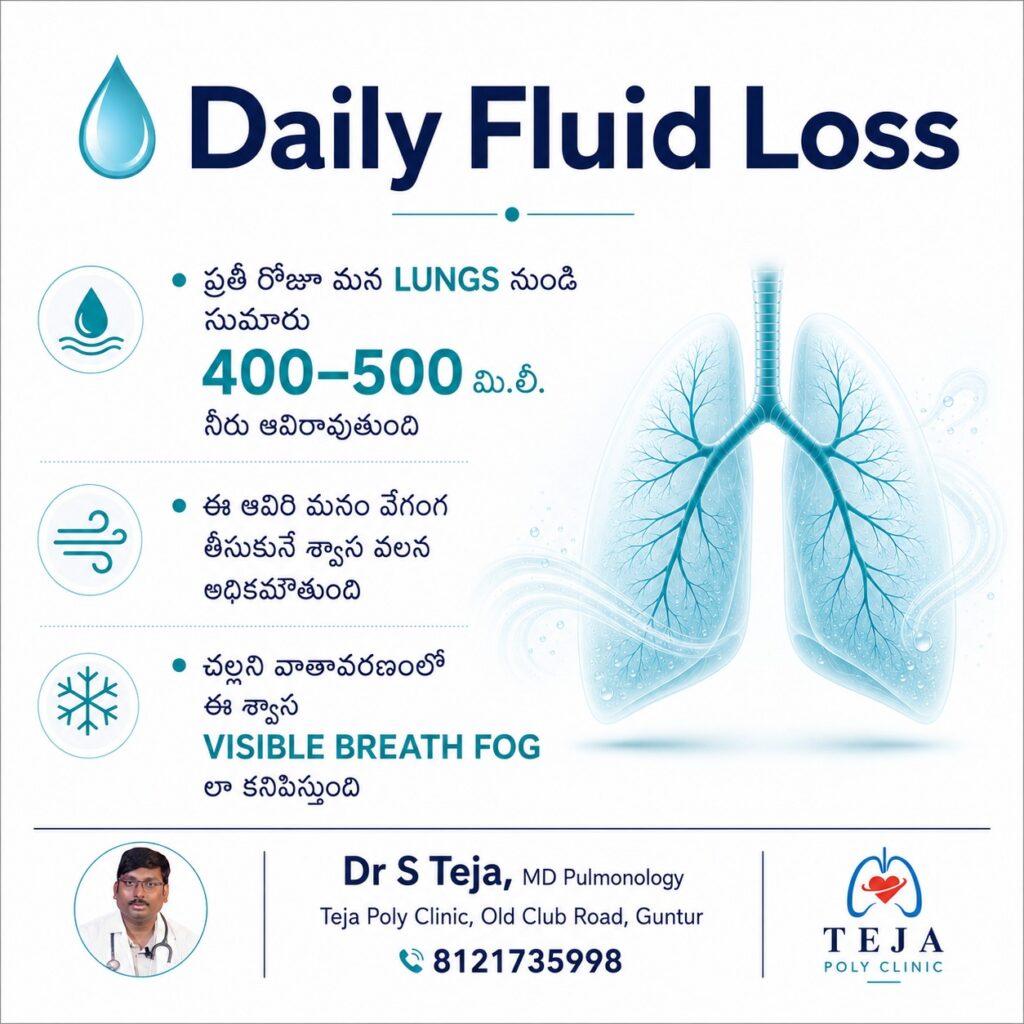

Did You Know You Lose Water Just by Talking and Breathing?
Have you ever noticed fog forming on a mirror or window when you breathe onto it? That visible mist is actually water vapor leaving your body. While most people associate dehydration with sweating, many are surprised to learn that breathing and talking also cause significant water loss every day.
Understanding the connection between lungs and dehydration is important for maintaining healthy respiratory function and overall wellness.
How Your Lungs Lose Water Every Day
The lungs are naturally moist organs. This moisture is essential because it helps oxygen move efficiently from the lungs into the bloodstream while removing carbon dioxide from the body.
Whenever you inhale, your respiratory tract warms and humidifies the air before it reaches the lungs. During exhalation, some of this moisture leaves the body as water vapor.
An average adult can lose around 400–500 ml of water daily simply through breathing. This amount may increase in certain situations such as:
Excessive talking
Mouth breathing
Exercise or physical activity
Hot or dry climates
Air-conditioned environments
High-altitude locations
This continuous fluid loss explains why proper hydration is essential for healthy lung function.
The Link Between Lungs and Dehydration
The relationship between lungs and dehydration is stronger than many people realize. When the body does not get enough fluids, the mucus lining inside the respiratory tract becomes thick and sticky.
Normally, this mucus helps trap dust, bacteria, allergens, and pollutants so the lungs can clear them out efficiently. However, dehydration reduces this protective function and may lead to:
Dry throat and irritation
Increased coughing
Breathing discomfort
Thick mucus buildup
Higher risk of respiratory infections
People with asthma, allergies, COPD, or chronic respiratory conditions may notice worsening symptoms when dehydrated.
Why Nose Breathing Matters
Breathing through the nose helps preserve moisture inside the respiratory system. The nose acts as a natural humidifier and filter, warming and moisturizing incoming air before it reaches the lungs.
Mouth breathing, especially during sleep or prolonged talking, causes faster water evaporation and contributes to dryness in the airways.
Simple breathing habits can support better respiratory hydration and improve overall lung health.
Simple Tips to Prevent Respiratory Dehydration
Maintaining hydration is one of the easiest ways to support healthy lungs. Here are some expert recommendations:
1. Drink Water Regularly
Do not wait until you feel thirsty. Sip fluids consistently throughout the day to compensate for water loss through breathing.
2. Prefer Nose Breathing
Whenever possible, breathe through your nose instead of your mouth to reduce moisture loss.
3. Use a Humidifier
Indoor air conditioning and heaters can dry out the airways. A humidifier can help maintain comfortable moisture levels indoors.
4. Stay Hydrated During Exercise
Heavy breathing during workouts increases respiratory water loss. Drink fluids before, during, and after physical activity.
5. Limit Excessive Caffeine
Too much caffeine may contribute to dehydration in some individuals, especially when fluid intake is low.
Protect Your Lung Health
Your lungs work continuously every second of the day, processing thousands of liters of air. Supporting them starts with simple daily habits like proper hydration and healthy breathing practices.
If you experience persistent cough, chest tightness, breathing difficulty, wheezing, or recurrent respiratory infections, consult a qualified pulmonologist for proper evaluation.
Consult an Experienced Lung Specialist in Guntur
For expert diagnosis and treatment of respiratory conditions, visit:
Dr. S. Teja, MD Pulmonology
Teja Poly Clinic and Maternity Hospital Old Club Road, Guntur
 8121735998
Early care and proper hydration can make a big difference in maintaining long-term respiratory health.