
Exercise for Breathlessness: Can Exercise Really Help?

Exercise for Breathlessness: Can Exercise Really Help?
Do you avoid physical activity because you are afraid that exercise will make your breathlessness worse? You are not alone. Many people with asthma, COPD, chronic lung disease, or reduced lung function limit their daily activities because they feel short of breath during exercise.
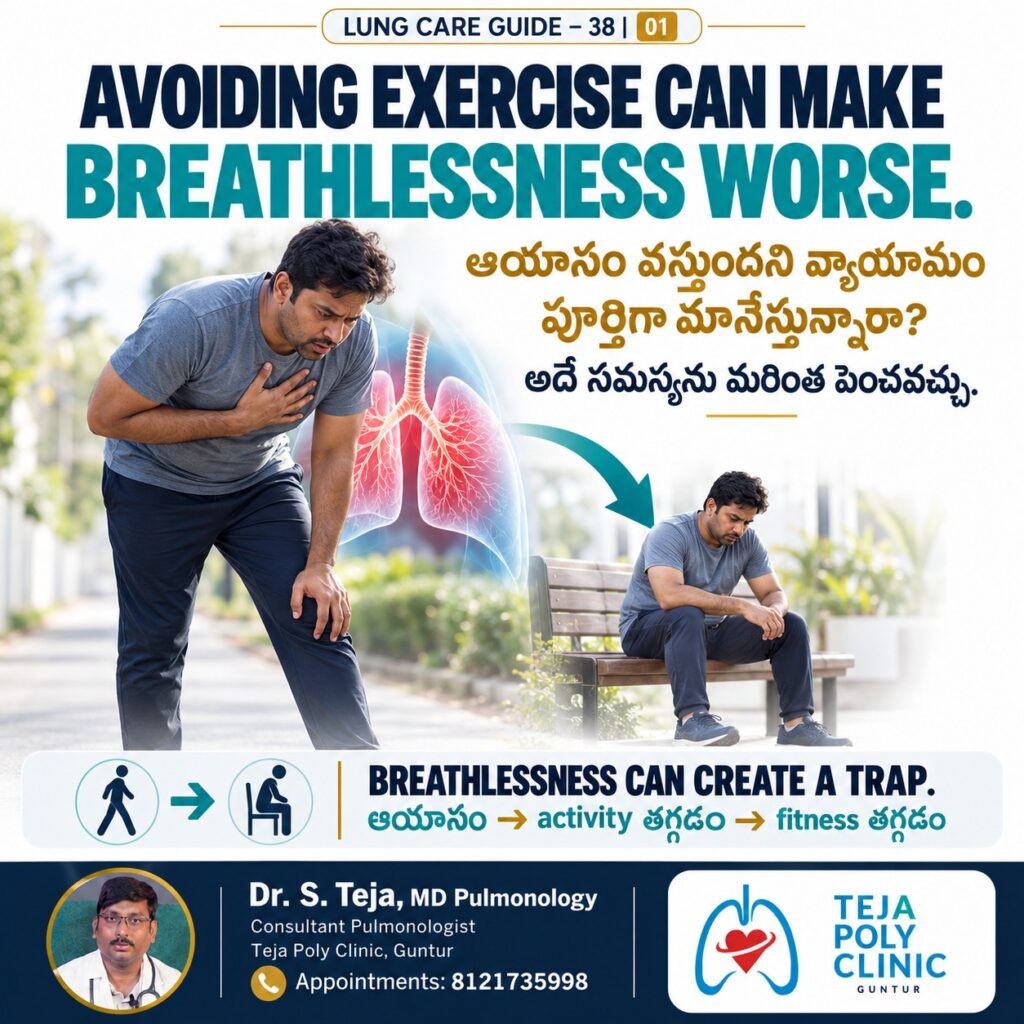
But here is something important to understand: avoiding exercise completely may actually make breathlessness worse over time.
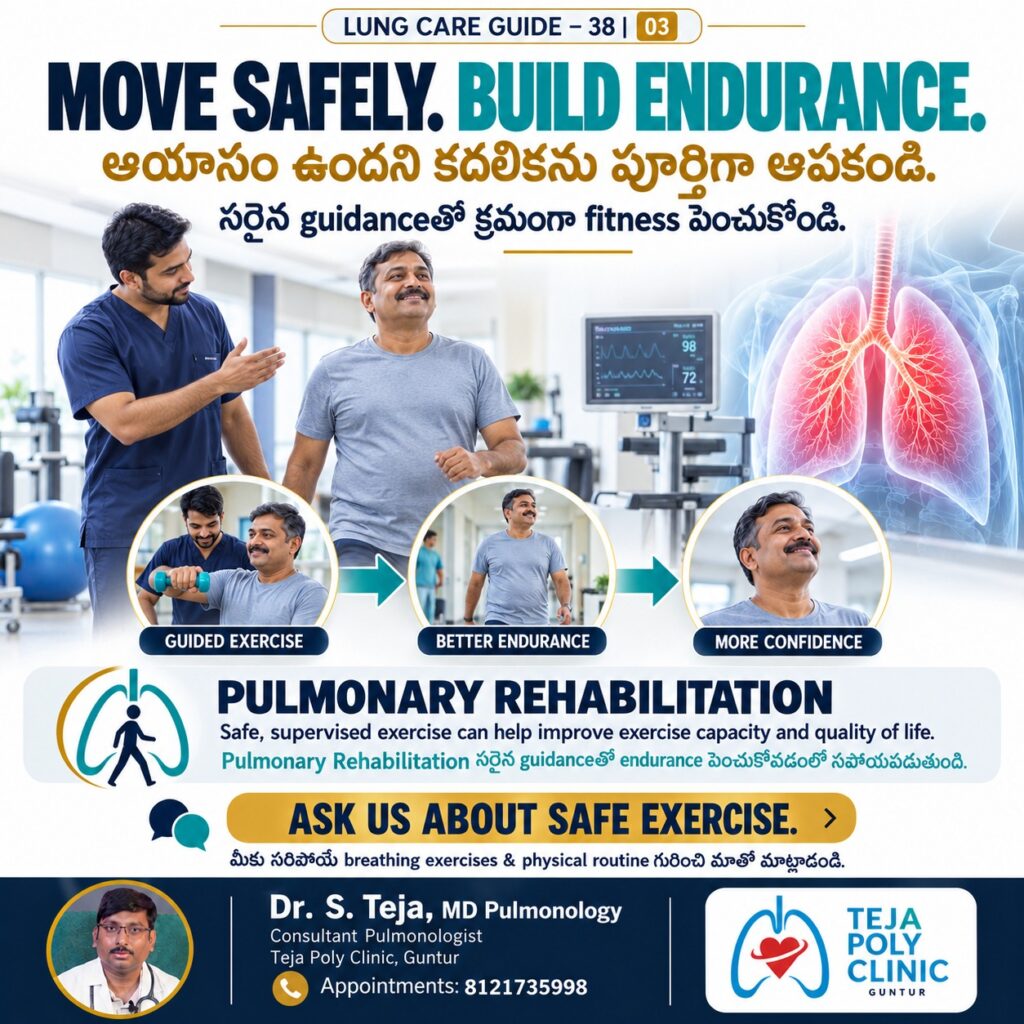
Appropriate exercise for breathlessness can help improve muscle strength, physical fitness, endurance, and confidence when it is performed safely and according to your medical condition.
Why Does Exercise Cause Breathlessness?
Breathlessness during physical activity can occur for several reasons. People with conditions such as COPD, asthma, interstitial lung disease, heart conditions, or poor physical fitness may experience shortness of breath when exercising.
When you exercise, your muscles need more oxygen and produce more carbon dioxide. Your breathing naturally becomes faster and deeper to meet these demands.
If your lungs or cardiovascular system cannot meet these increased demands efficiently, you may experience breathlessness.
Because this feeling can be uncomfortable, many people begin avoiding physical activity.
This can create a cycle:
Lung condition → Breathlessness → Avoiding exercise → Muscle weakness → Reduced fitness → More breathlessness
Breaking this cycle is an important part of managing many chronic respiratory conditions.
Can Exercise Help With Breathlessness?
Yes, appropriate exercise for breathlessness can help improve your physical capacity and ability to perform everyday activities.
Regular physical activity can help strengthen the muscles of your legs and arms, improve endurance, and make your body more efficient at using oxygen.
As your fitness improves, activities such as walking, climbing stairs, bathing, dressing, and household work may become easier.
However, exercise does not mean pushing yourself until you are exhausted.
The goal is safe, gradual and consistent physical activity based on your health condition.
What Is Pulmonary Rehabilitation?
For people with certain chronic respiratory conditions, pulmonary rehabilitation may be recommended.
Pulmonary rehabilitation is a structured program that commonly includes:
Supervised exercise training
Breathing techniques
Education about lung disease
Strategies to manage breathlessness
Energy-conservation techniques
Lifestyle guidance
Nutritional advice when appropriate
Pulmonary rehabilitation is particularly beneficial for many people with COPD and may also be appropriate for selected patients with other chronic respiratory diseases.
The objective is not to repair permanently damaged lungs. Instead, it helps patients use their available physical capacity more effectively and improve their ability to perform daily activities.
Breathing Exercises for Breathlessness
Certain breathing techniques may help some people manage their breathing more effectively.
One commonly used technique is pursed-lip breathing, where you breathe in gently through your nose and breathe out slowly through partially closed lips.
This technique may help some people with obstructive lung diseases control their breathing and reduce the sensation of breathlessness.
Other breathing techniques may also be recommended depending on the individual’s condition.
However, breathing exercises are not suitable as a substitute for medical treatment. The right technique should depend on your diagnosis and symptoms.
Don’t Let Fear of Breathlessness Stop You
Many people become less active because they are afraid of becoming breathless.
But prolonged inactivity can lead to muscle deconditioning. When your muscles become weaker, everyday activities can require more effort, potentially making you feel breathless more easily.
That is why a carefully planned approach to exercise for breathlessness can be valuable.
Start gradually, follow professional guidance, and increase activity according to your tolerance and medical advice.
The goal is not to exercise harder.
The goal is to become stronger and more active safely.
When Should You See a Pulmonologist?
Not every episode of breathlessness is caused by a lung problem.
You should seek medical evaluation if your breathlessness is new, worsening, unexplained, or interfering with your daily activities.
Medical advice is especially important if you have:
COPD or another chronic lung condition
Frequent asthma symptoms
Breathlessness during routine activities
Low oxygen levels
A recent respiratory infection or hospitalization
Chest pain during exercise
Dizziness or fainting during exertion
A significant reduction in exercise tolerance
A Pulmonologist in Guntur can evaluate your symptoms and determine whether lung function testing, oxygen assessment, medication adjustment, pulmonary rehabilitation, or another evaluation may be appropriate.
Exercise Should Be Individualized
There is no single exercise plan that is suitable for everyone with breathlessness.
Your appropriate activity level can depend on your diagnosis, lung function, oxygen levels, medications, fitness level, age, and other health conditions.
Therefore, if you have significant respiratory symptoms, speak with a qualified healthcare professional before starting an intense exercise program.
With the right guidance, many people with chronic respiratory conditions can safely become more active and improve their ability to perform daily activities.
The Bottom Line
Exercise for breathlessness isn’t about pushing your body beyond its limits. It’s about improving your strength, endurance, and confidence safely.
Avoiding all physical activity may contribute to muscle weakness and reduced fitness, which can make everyday activities more difficult.
If you frequently experience breathlessness, don’t simply stop exercising without understanding the cause.
Consult a Pulmonologist in Guntur to identify the reason for your symptoms and discuss an appropriate physical activity or pulmonary rehabilitation plan.
Dr. S. Teja, MD Pulmonology
Teja Poly Clinic, Guntur
Appointments: 8121735998