
Farmers Respiratory Health: Protect Your Lungs From Agricultural Dust and Chemicals

Farmers Respiratory Health: Protect Your Lungs From Agricultural Dust and Chemicals
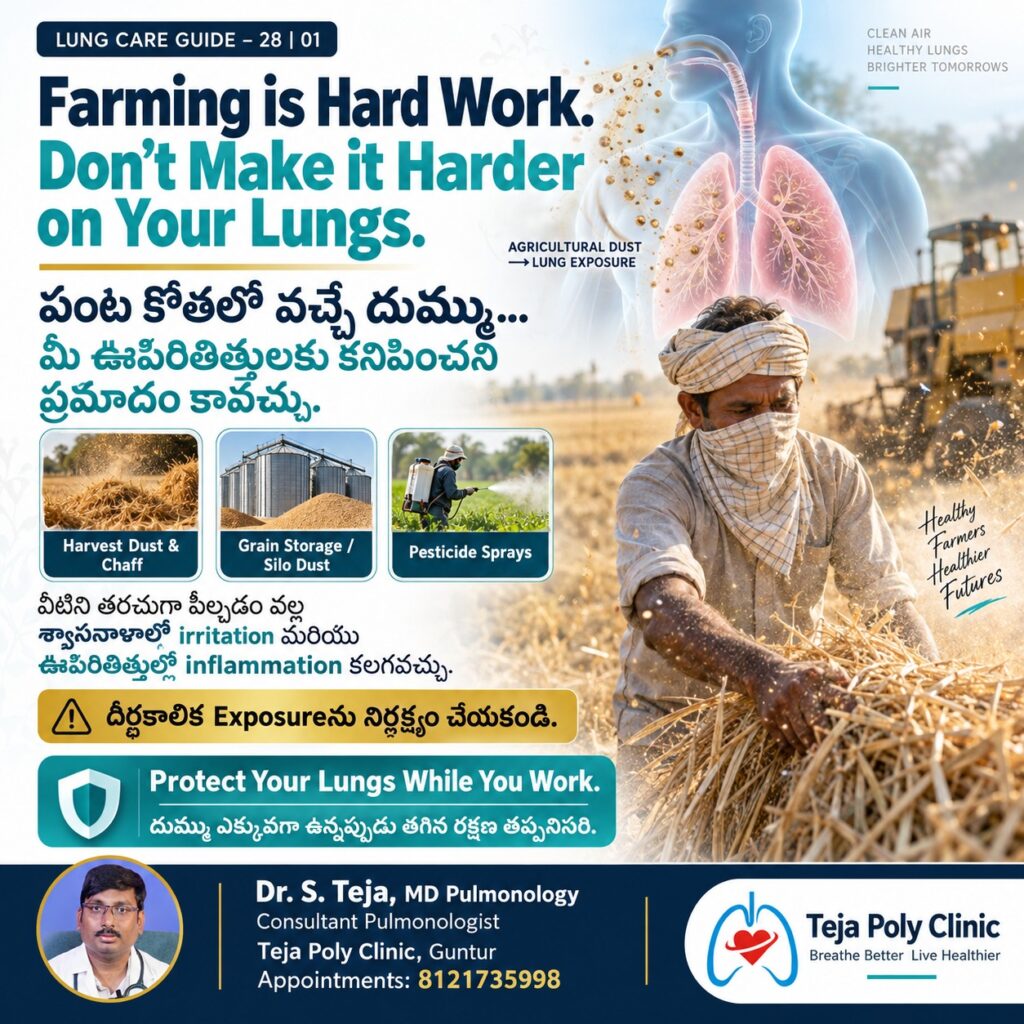
Farming is hard work, and protecting your farmers respiratory health is just as important as protecting your crops, livestock, and equipment. During harvest season, farmers are frequently exposed to soil dust, grain dust, mold spores, pesticides, fertilizers, and other airborne particles that can affect the lungs.
In my pulmonology practice, I see agricultural workers who develop a persistent dry cough, unusual tiredness, wheezing, or shortness of breath but initially assume these symptoms are simply part of working in dusty fields. However, repeated exposure to agricultural dust can contribute to significant respiratory problems.
If you work in or around farms in Guntur and experience ongoing breathing symptoms, consulting a Pulmonologist in Guntur can help identify the cause early and guide appropriate treatment and preventive measures.
Why Farmers Need to Protect Their Respiratory Health
Farm work can expose your lungs to a mixture of organic and inorganic particles. Depending on the activity, you may inhale:
Soil and field dust
Grain and crop dust
Mold and fungal spores
Plant particles
Animal and insect particles
Smoke and other airborne pollutants
Pesticide sprays and chemical mists
Repeated exposure may irritate the airways and, in some people, trigger allergic or inflammatory lung conditions.
Good farmers respiratory health therefore starts with understanding where exposure occurs and taking practical steps to reduce the amount of dust and chemicals reaching your lungs.
Understanding Farmer’s Lung
One important condition associated with agricultural exposure is Farmer’s lung, a form of hypersensitivity pneumonitis.
Farmer’s lung can occur when susceptible individuals repeatedly inhale organic dust containing certain molds, particularly from moldy hay, grain, straw, or other agricultural materials.
Symptoms may include:
Persistent or recurring dry cough
Shortness of breath
Chest discomfort
Fatigue
Fever or chills in some cases
Breathlessness during physical activity
Symptoms can occur after heavy exposure or develop gradually with repeated exposure.
Continued exposure in affected individuals can cause ongoing inflammation and, in some cases, permanent lung damage. This is why recognizing symptoms early and reducing exposure are important parts of maintaining farmers respiratory health.
High-Risk Activities for Farmers
Certain farming activities can create particularly high levels of airborne dust and other respiratory hazards.
1. Harvesting and Tilling
Harvesting, threshing, ploughing, and tilling can generate large amounts of soil, crop, and plant dust. Working close to operating machinery may increase the amount of airborne material you breathe.
Whenever possible, reduce unnecessary exposure to visible dust and use appropriate respiratory protection.
2. Grain Storage and Silos
Grain storage areas can contain dust and, when crops become damp or contaminated, mold spores.
Opening, moving, cleaning, or aerating stored grain can release concentrated airborne particles. Good ventilation, appropriate protective equipment, and safe grain-handling practices can help reduce exposure.
3. Handling Moldy Hay or Grain
Mold-contaminated agricultural materials are an important concern for people susceptible to hypersensitivity pneumonitis.
Avoid unnecessary exposure to visibly moldy materials and use appropriate respiratory protection when handling them.
4. Pesticide and Chemical Application
Pesticide application can expose workers to chemical droplets, aerosols, and vapors. The type and severity of risk depend on the particular product, concentration, application method, and exposure.
Always follow the product label and required safety precautions. Use the personal protective equipment specified for the chemical rather than relying on a basic face covering.
Why a Cloth Mask May Not Be Enough
A cloth mask or bandana may provide limited protection from larger particles, but it should not automatically be considered adequate respiratory protection for agricultural dust or chemical exposure.
The appropriate respirator depends on the hazard.
For particulate dust, a properly fitted particulate respirator such as an N95 may be appropriate for many situations. Higher-efficiency respirators may be required for certain high-dust environments.
Chemical exposure is different. A respirator selected for particles does not necessarily protect against gases or vapors. When working with pesticides or other chemicals, use the respiratory protection specified by the product’s safety instructions and occupational-safety guidance.
Simple Steps to Protect Farmers Respiratory Health
Protecting your lungs does not have to be complicated. Consider these practical measures:
Reduce unnecessary exposure to heavy agricultural dust.
Keep work areas adequately ventilated.
Avoid disturbing moldy grain, hay, or other organic material unnecessarily.
Use a properly fitted respirator appropriate for the specific hazard.
Follow pesticide labels and chemical safety instructions.
Maintain and replace respirator filters or cartridges according to manufacturer instructions.
Wash work clothes regularly after heavy dust or chemical exposure.
Do not ignore persistent cough or breathlessness.
Seek medical evaluation when respiratory symptoms repeatedly occur after farm work.
When Should a Farmer See a Pulmonologist?
A cough after a particularly dusty day does not necessarily mean you have Farmer’s lung. However, persistent or recurring symptoms deserve attention.
Consider consulting a Pulmonologist in Guntur if you experience:
A cough that does not go away
Repeated episodes of breathlessness after working with grain, hay, or crop dust
Shortness of breath during routine activities
Wheezing or chest tightness
Unexplained fatigue associated with breathing problems
Symptoms that repeatedly become worse during or after particular farming activities
A pulmonologist can assess your symptoms, occupational exposure, medical history, and lung function to determine whether further evaluation is necessary.
Prevention Is an Important Part of Farmers Respiratory Health
Many agricultural respiratory problems can be reduced by identifying hazardous exposures and taking appropriate precautions.
Don’t wait until breathing difficulties interfere with your ability to work. Pay attention to recurring symptoms, especially when they are consistently associated with harvesting, grain handling, moldy hay, or other farm activities.
Your lungs work as hard as you do. Protecting your farmers respiratory health today can help you continue doing the work you depend on for years to come.
If you are experiencing persistent cough, breathlessness, wheezing, or other respiratory symptoms related to agricultural work, consult a qualified Pulmonologist in Guntur for an appropriate medical evaluation.