
World Patient Safety Day 2026: Safe Care Starts With You
World Patient Safety Day 2026: Safe Care Starts With You
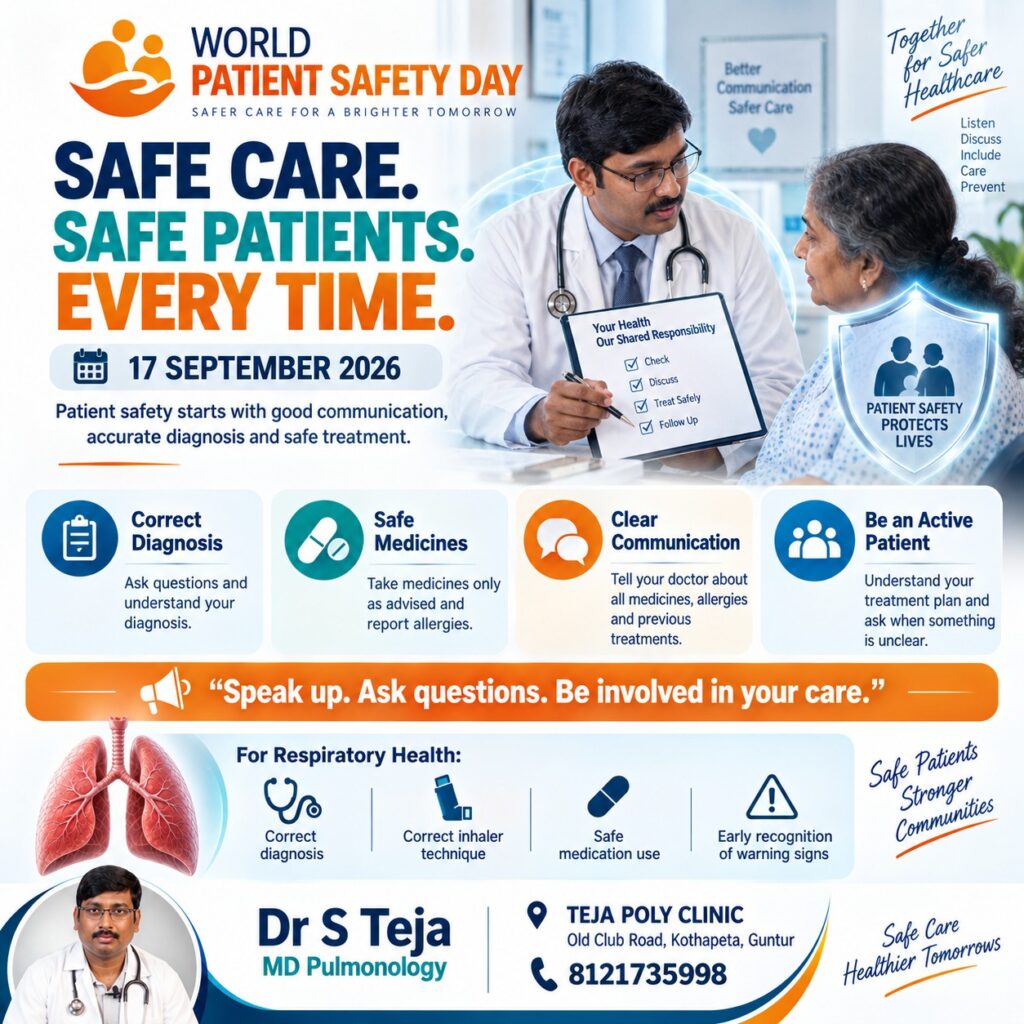
World Patient Safety Day 2026 is observed on 17 September under the leadership of the World Health Organization (WHO). The day raises awareness about preventing avoidable harm in healthcare and highlights the importance of safer care through better communication, teamwork and patient participation.
Patient safety is a shared responsibility. Doctors, nurses, pharmacists, hospitals, patients and families all have an important role in making healthcare safer. By asking questions, sharing accurate medical information and understanding your treatment, you can actively participate in your own healthcare.
For people with respiratory conditions, regular communication with a qualified Pulmonologist in Guntur can also help ensure that symptoms, medications, inhaler techniques and follow-up plans are clearly understood.
Why Is Patient Safety Important?
Healthcare involves many important decisions, including diagnosis, investigations, medications, procedures and follow-up care. Avoidable problems can sometimes occur when medical information is incomplete, communication is unclear or important details are missed.
World Patient Safety Day 2026 emphasizes the need for healthcare systems that identify risks and reduce preventable harm.
Examples of patient-safety concerns include:
Diagnostic errors
Medication errors
Miscommunication between healthcare professionals
Healthcare-associated infections
Incorrect or incomplete patient information
Delays in recognizing warning signs
Errors associated with procedures or treatment
Patient safety does not depend only on individual healthcare professionals being careful. It also requires effective communication, standardized processes, teamwork, appropriate technology and continuous improvement.
What Can Patients Do to Improve Patient Safety?
1. Share Your Complete Medical History
Always provide your healthcare professional with relevant information about your health, including:
Previous illnesses
Current medications
Drug allergies
Previous surgeries or hospitalizations
Important investigation reports
Previous medication reactions or treatment problems
Information that may seem minor can sometimes be important when making a diagnosis or selecting treatment.
2. Keep an Updated List of Your Medicines
If you take medicines prescribed by different doctors, maintain an updated medication list.
Include:
Medicine name + dose + frequency + reason for taking it
Carry this information when visiting a new doctor, specialist or hospital. It can help healthcare professionals understand your current treatment and reduce the risk of medication-related problems.
3. Ask Questions About Your Diagnosis
You should feel comfortable asking questions if you do not understand your diagnosis or treatment.
You can ask:
What is my diagnosis?
What tests do I need?
Why do I need this treatment?
How should I take my medicines?
What warning signs should I watch for?
When should I return for follow-up?
Asking questions is an important part of patient safety.
4. Use Medicines Safely
Do not assume that a medicine is suitable simply because it helped another person.
Avoid starting, stopping or changing prescription medicines without appropriate medical advice. If you experience a suspected medicine-related reaction, contact your healthcare professional promptly.
Always follow the prescribed dose and schedule unless your healthcare professional advises otherwise.
5. Use Antibiotics Responsibly
Antibiotics are important medicines for treating certain bacterial infections, but they are not effective against every infection.
Using antibiotics unnecessarily can contribute to antimicrobial resistance and may expose patients to avoidable side effects.
Do not take leftover antibiotics or someone else’s prescription. Use antibiotics only when appropriately prescribed by a qualified healthcare professional.
Patient Safety in Respiratory Care
Patient safety is particularly important for people living with respiratory conditions such as asthma, COPD, pneumonia and tuberculosis.
Respiratory symptoms can sometimes worsen rapidly, so understanding your treatment plan and knowing when to seek medical attention are important.
If you are being treated for a lung or breathing problem, a Pulmonologist in Guntur can help assess respiratory symptoms, recommend appropriate investigations and develop a treatment and follow-up plan based on your individual condition.
Inhaler Technique Matters
For people using inhalers, having the correct medicine is only part of effective treatment. Incorrect inhaler technique can reduce the amount of medicine reaching the lungs.
Ask your healthcare professional to demonstrate the correct technique. Your inhaler technique can also be checked periodically during follow-up visits.
If you use an inhaler regularly, make sure you understand:
How to use it correctly
How often to use it
Whether a spacer is recommended
How to clean and maintain the device
When to seek medical advice if symptoms worsen
Do Not Ignore Warning Symptoms
Some respiratory symptoms require timely medical assessment.
Seek urgent medical attention if you experience symptoms such as:
Severe or rapidly worsening breathlessness
Difficulty speaking because of breathlessness
Bluish discoloration of the lips or face
Confusion or unusual drowsiness
Chest pain
Significantly low oxygen saturation when measured appropriately
Rapid deterioration of respiratory symptoms
The appropriate response depends on the severity and cause of the symptoms. Do not delay urgent medical care when serious warning signs are present.
Communication Is a Patient Safety Tool
One of the simplest ways to improve patient safety is through clear communication.
Patients should tell their healthcare professionals when:
They do not understand an instruction
They are unsure how to take a medicine
They develop a new or worsening symptom
They have experienced a previous medication reaction
They are unable to follow the prescribed treatment plan
Something about their diagnosis or treatment is unclear
Healthcare professionals should encourage patients and families to ask questions and participate in decisions about their care.
This collaborative approach is an important message of World Patient Safety Day 2026.
Patient Safety Checklist
Before leaving a consultation, make sure you understand:
✓ What is my diagnosis?
✓ What treatment has been prescribed?
✓ How should I take my medicines?
✓ How long should I continue the treatment?
✓ Are there important side effects I should know about?
✓ What symptoms require urgent medical attention?
✓ When should I return for follow-up?
If you are unsure about any of these points, ask your healthcare professional to explain them.
World Patient Safety Day 2026: Why Patient Participation Matters
World Patient Safety Day 2026 reminds us that safer healthcare requires participation from everyone involved in the healthcare process.
Patients can contribute to safer care by:
Providing accurate medical information
Keeping an updated medicine list
Asking questions
Following treatment instructions
Reporting new or unexpected symptoms
Understanding warning signs
Attending recommended follow-up appointments
Speaking up when something is unclear
These simple actions can support better communication between patients and healthcare professionals.
Orange for Patient Safety
Orange is associated with World Patient Safety Day awareness activities. Healthcare institutions and landmarks in different parts of the world may use orange lighting, displays or other activities to raise awareness about patient safety.
The colour serves as a reminder to start conversations about safer healthcare and the importance of involving patients in their care.
The Message of World Patient Safety Day 2026
Patient safety is not only the responsibility of doctors or hospitals. It is a shared responsibility involving healthcare professionals, patients and families.
Good healthcare is about more than treating disease. It also means ensuring that accurate information is communicated, appropriate treatment is provided safely and patients understand how they can participate in their care.
For patients with respiratory problems, maintaining open communication with their healthcare team and seeking appropriate specialist care can be particularly important.
If you are experiencing ongoing or worsening breathing problems, consult a qualified respiratory specialist or Pulmonologist in Guntur for appropriate medical evaluation.
This World Patient Safety Day 2026, Remember:
Ask questions.
Share accurate information.
Understand your treatment.
Take medicines responsibly.
Follow your healthcare professional’s instructions.
Speak up when something is unclear.
Know when to seek urgent medical attention.
Frequently Asked Questions
What is World Patient Safety Day 2026?
World Patient Safety Day 2026 is observed on 17 September to raise awareness about patient safety and the prevention of avoidable harm in healthcare.
Why is patient safety important?
Patient safety helps reduce preventable errors and harm associated with diagnosis, medication, communication, procedures and healthcare delivery.
How can patients improve their own safety?
Patients can improve safety by sharing accurate medical information, maintaining an updated medication list, asking questions, understanding their treatment and reporting new or concerning symptoms.
When should I see a Pulmonologist in Guntur?
People with persistent, recurrent or worsening respiratory symptoms may need evaluation by a respiratory specialist. Symptoms such as significant breathlessness, chest pain, bluish lips or rapid deterioration may require urgent medical attention.
How can I use my inhaler safely?
Follow the instructions provided by your healthcare professional and ask them to demonstrate the correct inhaler technique. Periodic technique checks can help identify and correct problems.