
Can a Handkerchief Protect from Dust? Here's What You Need to Know
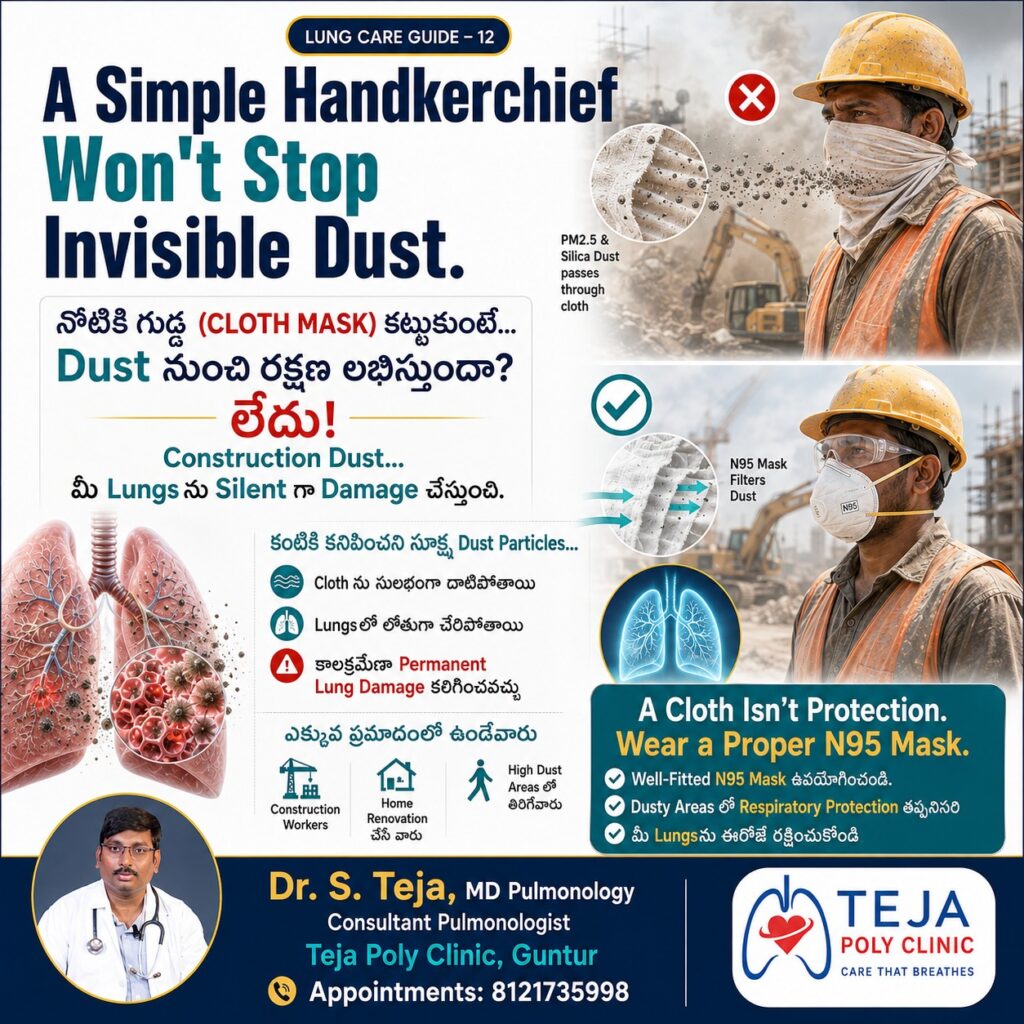
Can a Handkerchief Protect from Dust? Here’s What You Need to Know
Have you ever walked past a construction site and instinctively covered your nose with a handkerchief or the collar of your shirt? Most of us have. It feels like a quick and easy way to keep dust out of our lungs. But can a handkerchief protect from dust? The simple answer is no.
While a cotton handkerchief may block larger particles, it cannot filter the microscopic dust particles that pose the greatest risk to your lungs. Understanding why this happens can help you take the right steps to protect your respiratory health.
Why a Handkerchief Is Not Enough
Many people assume that any cloth covering acts as a filter. Unfortunately, this is a common misconception. Cotton handkerchiefs have loose fibres that allow tiny dust particles to pass through easily. Even more importantly, they do not create a proper seal around your nose and mouth.
When you breathe, air naturally flows through the gaps around the edges of the cloth rather than through it. This means that most harmful particles still enter your airways, making the handkerchief largely ineffective against dangerous dust.
The Real Danger Is Invisible Dust
The dust you see floating in the air is not always the biggest concern. The most harmful particles are often too small to be seen with the naked eye.
Construction sites, road work, demolition projects, and home renovations release extremely fine particles, including:
Silica dust from concrete, bricks, and cement
PM2.5 fine particulate matter
Wood dust and sawdust
Metal and mineral dust
These microscopic particles remain suspended in the air for long periods and are easily inhaled deep into the lungs.
What Happens When You Breathe in Construction Dust?
Unlike larger particles that become trapped in your nose or throat, fine dust travels deep into the lungs and reaches the tiny air sacs called alveoli, where oxygen exchange occurs.
Repeated exposure can lead to:
Persistent dry cough
Shortness of breath
Chronic airway inflammation
Reduced lung function
Pulmonary fibrosis (lung scarring)
Silicosis caused by silica dust exposure
These conditions often develop gradually and may become permanent if exposure continues over time.
Can a Handkerchief Protect from Dust?
The answer is no, especially in environments with construction or industrial dust.
A handkerchief cannot:
Filter microscopic PM2.5 particles
Stop silica dust
Form an airtight seal around the face
Provide certified respiratory protection
It may stop larger dirt particles from reaching your face, but it does not prevent harmful fine dust from entering your lungs.
What Should You Use Instead?
If you regularly pass through construction zones, work around renovation projects, or live in areas with heavy air pollution, a well-fitted N95 respirator is a much safer choice.
An N95 mask is specifically designed to:
Filter at least 95% of airborne particles
Block fine silica and PM2.5 dust
Create a close facial seal
Reduce the amount of harmful particles entering your lungs
For maximum protection, ensure the mask fits snugly without gaps around your nose and cheeks.
Who Is at Greater Risk?
Some people are more vulnerable to dust exposure than others, including:
Construction workers
Factory employees
Painters and carpenters
People living near construction sites
Individuals with asthma or COPD
Older adults and children
Even brief exposure can worsen breathing problems in people with existing lung diseases.
How to Protect Your Lungs
Simple preventive measures can significantly reduce your risk:
Wear a properly fitted N95 mask in dusty environments.
Avoid unnecessary exposure to construction sites.
Keep windows closed when heavy dust is present.
Wash your face and hands after dust exposure.
Stay hydrated to help your airways clear mucus.
Seek medical evaluation if symptoms persist.
When Should You See a Doctor?
If you develop a persistent cough, wheezing, chest tightness, or shortness of breath after repeated dust exposure, do not ignore these warning signs. Early evaluation can identify lung problems before they become severe.
Consult an experienced Pulmonologist in Guntur if you have prolonged exposure to construction dust or ongoing respiratory symptoms. Timely diagnosis and appropriate treatment can help protect your lungs and prevent long-term complications.
Final Thoughts
So, can a handkerchief protect from dust? Unfortunately, it cannot. While it may provide psychological comfort, it does not filter the microscopic particles responsible for serious lung diseases such as silicosis and pulmonary fibrosis.
Protecting your lungs requires more than simply covering your face. Choosing a certified N95 respirator, limiting exposure to dusty environments, and seeking advice from a qualified Pulmonologist in Guntur when symptoms arise are the best ways to safeguard your long-term respiratory health.
Your lungs work every second of your life—give them the protection they deserve.