
How Big Is Lung Surface Area? The Hidden “Tennis Court” Inside Your Chest
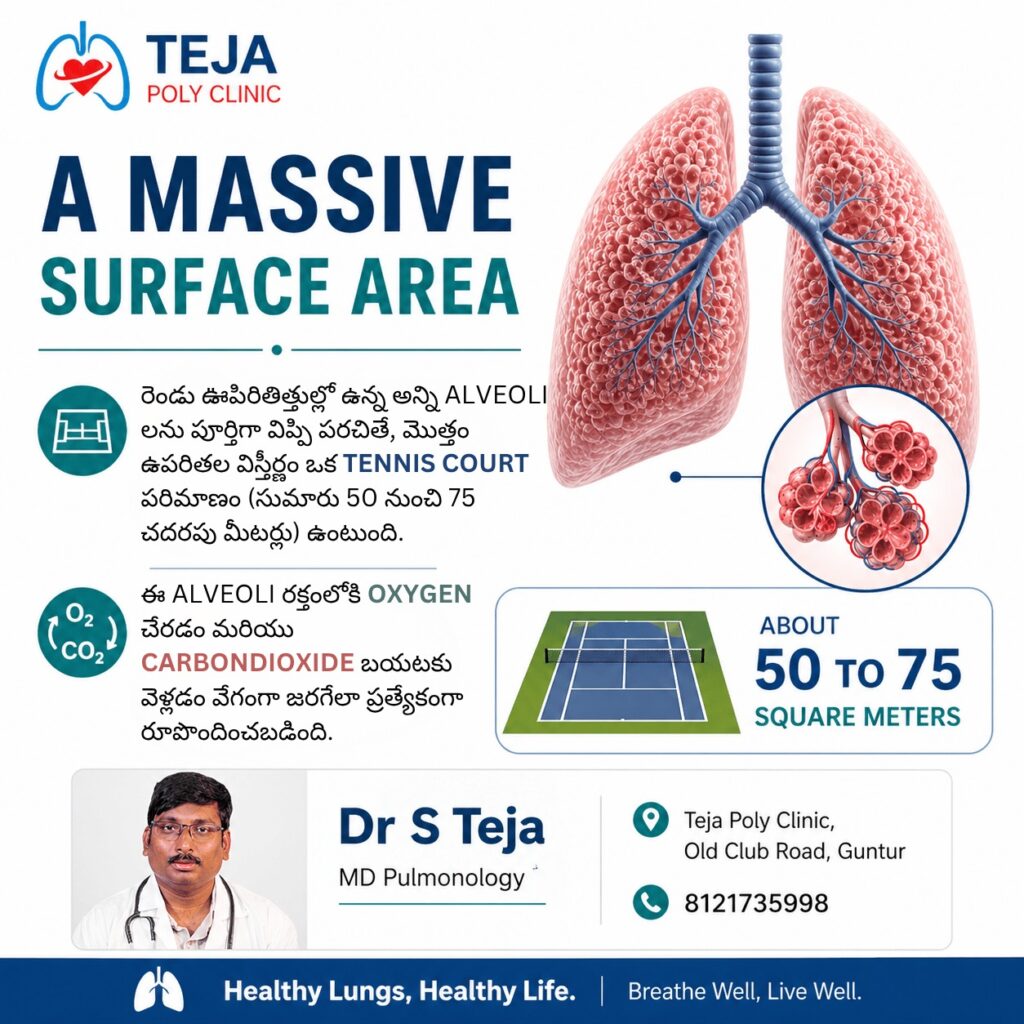
The Hidden “Real Estate” Inside Your Chest
How big is lung surface area? It sounds unbelievable, but your lungs contain a surface area comparable to a tennis court. Packed within your ribcage is an incredibly efficient biological design that allows you to breathe, move, and live.
If all the tiny air sacs in your lungs were spread flat, they would cover roughly 50 to 75 square meters. That’s about the size of a small apartment—compressed into an organ no larger than a pair of grapefruits.
This massive surface area is what powers every breath you take.
What Are Alveoli?
At the ends of your respiratory system lie microscopic structures called alveoli. These are the true workhorses behind breathing.
Quantity: Around 480 million alveoli in the human lungs
Function: Primary site of oxygen and carbon dioxide exchange
Structure: Ultra-thin walls—just one cell thick—for rapid diffusion
Think of alveoli as tiny balloons clustered together. Each one increases the total surface area, making gas exchange incredibly efficient.
How Big Is Lung Surface Area—and Why Does It Matter?
In biology, surface area equals efficiency. The larger the surface, the more space there is for oxygen to enter your bloodstream and carbon dioxide to exit.
Here’s a quick breakdown:
| Feature | Lung Specification |
|---|---|
| Total Surface Area | 50 – 75 square meters |
| Primary Goal | Rapid gas exchange |
| Oxygen Intake | Diffusion into blood |
| Waste Removal | Carbon dioxide elimination |
Because of this vast surface, your lungs can handle everything from intense exercise to restful sleep without missing a beat.
The “Tennis Court” Comparison Explained
To better understand how big lung surface area is, let’s visualize it:
Singles tennis court: ~195 square meters
Your lungs: ~50–75 square meters
Comparison: About 1/3 to 1/2 of a tennis court
Now imagine folding that much surface area into your chest. This compact design is one of the most remarkable feats of natural engineering.
Why Surface Area Is Critical for Survival
Your body constantly needs oxygen to fuel vital organs like the brain, heart, and muscles. The large lung surface area ensures:
Maximum oxygen absorption
Efficient carbon dioxide removal
Stable energy production
Without this expansive surface, even simple activities like walking or thinking would become difficult.
What Happens When Lung Surface Area Decreases?
Damage to alveoli reduces lung surface area, directly impacting your breathing efficiency.
Conditions like emphysema cause alveoli to:
Lose their shape
Merge into larger, less efficient sacs
Reduce total surface area
This makes oxygen exchange slower and less effective, leading to breathlessness and fatigue.
A chest specialist in Guntur often sees patients with reduced lung capacity due to smoking, pollution, or untreated respiratory conditions.
How to Protect Your Lung Surface Area
Since your lung efficiency depends on maintaining this delicate structure, protecting your alveoli is essential.
1. Avoid Air Pollutants
Smoke, dust, and industrial pollution can inflame and damage alveoli.
2. Practice Deep Breathing
Deep breathing exercises help expand the lower parts of your lungs, ensuring full utilization of available surface area.
3. Stay Hydrated
A thin fluid layer inside alveoli helps gases dissolve and diffuse efficiently.
4. Get Regular Checkups
Consulting a chest specialist in Guntur can help detect early signs of lung damage and prevent long-term complications.
The Bottom Line
So, how big is lung surface area? Surprisingly, it’s as large as a tennis court, folded neatly inside your chest.
This enormous surface area is what allows your body to function smoothly every second of the day. Your lungs aren’t just organs—they’re a finely tuned, high-efficiency system designed for survival.
The next time you take a deep breath, remember: you’re using a structure as vast as an apartment and as efficient as a high-tech filter—all working silently to keep you alive.