
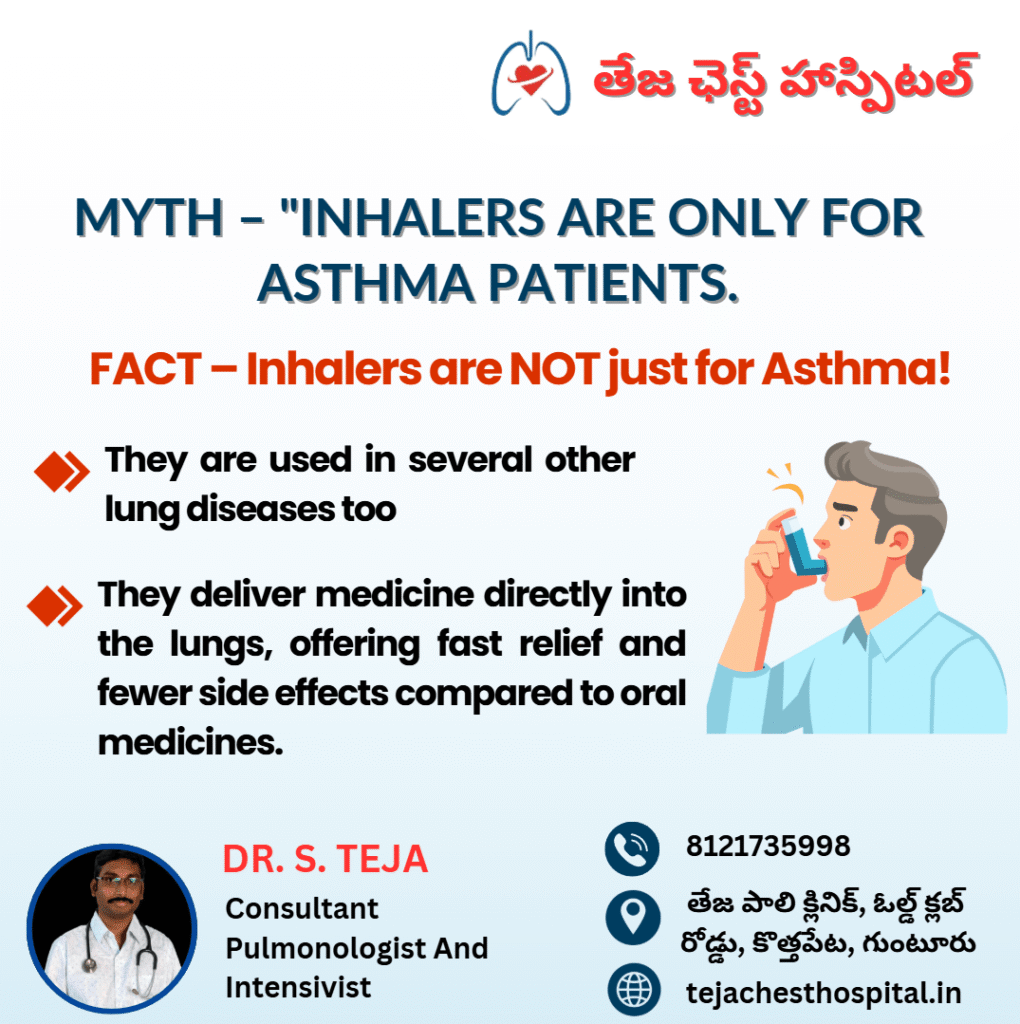
No, inhalers are definitely not only used for asthma. While asthma is one of the most common conditions requiring inhaler therapy, these devices are essential treatments for numerous respiratory conditions beyond asthma.
Primary Conditions Treated with Inhalers
Chronic Obstructive Pulmonary Disease (COPD)
COPD is actually one of the most significant uses for inhalers outside of asthma. Inhalers are the primary treatment method for COPD, including:
· Short-acting bronchodilators like salbutamol and ipratropium for immediate symptom relief
· Long-acting bronchodilators including LABA (salmeterol, formoterol) and LAMA (tiotropium) medications
· Combination inhalers that contain both bronchodilators and inhaled corticosteroids
Illustration showing healthy and COPD-affected airways with symptoms and causes of chronic obstructive pulmonary disease.
Bronchitis and Other Respiratory Infections
Healthcare providers sometimes prescribe inhalers for respiratory infections like bronchitis. Short-acting beta-2 agonists such as albuterol can help with severe coughing that accompanies acute bronchitis, particularly in patients who tend to wheeze frequently.
Diagram contrasting a healthy airway with bronchitis-affected airway showing inflammation, mucus, and symptoms of bronchitis in the respiratory system.
Cystic Fibrosis
Inhalers play a crucial role in cystic fibrosis management. These patients commonly use:
· Bronchodilators like albuterol to help open airways and facilitate mucus clearance
· Inhaled antibiotics including tobramycin and colistin to treat chronic bacterial infections
· Inhaled mucolytics to help thin and clear thick mucus secretions
Bronchiectasis
Patients with bronchiectasis frequently require inhaler therapy. Common treatments include:[13][14]
· Inhaled bronchodilators to open airways
· Nebulized saline solutions to help mobilize secretions
· Inhaled antibiotics for chronic bacterial infections
Pulmonary Fibrosis and Interstitial Lung Disease
While not always the primary treatment, inhalers can be beneficial for patients with pulmonary fibrosis who also have airway obstruction components. Some patients with these conditions may benefit from bronchodilators if they show evidence of reversible airway obstruction on lung function tests.
Comparison of blue reliever and brown preventer inhalers used in asthma treatment showing their active ingredients, usage times, and common brand names.
Types of Medications in Inhalers
The misconception that inhalers are only for asthma likely stems from their association with the common blue reliever inhalers containing salbutamol.
Colors, types, active ingredients, and brand examples of inhalers used for asthma treatment categorized as reliever, preventer (steroid), and combination inhalers.
However, inhalers deliver many different types of medications:
Bronchodilators
· Short-acting: Albuterol, salbutamol, ipratropium
· Long-acting: Salmeterol, formoterol, tiotropium
· Combination: LABA/LAMA combinations for enhanced effect
Anti-inflammatory Medications
· Inhaled corticosteroids: Fluticasone, budesonide, beclomethasone
· Combination ICS/LABA: For both inflammation control and bronchodilation
Antimicrobials
· Inhaled antibiotics: Tobramycin, colistin, aztreonam for respiratory infections
Specialized Therapies
· Mucolytics for thick secretion management
· Antifibrotic agents (experimental) for pulmonary fibrosis
Categorized inhalers for respiratory conditions showing medication types, doses, and brands relevant to asthma and COPD treatment.
Device Types Beyond Traditional Inhalers
The term “inhaler” encompasses various delivery systems:
Various types of inhalers and nebulizers used for asthma and respiratory therapy, including MDIs, nebulizers, and dry powder inhalers.
· Metered-dose inhalers (MDI): The traditional pressurized inhalers
· Dry powder inhalers (DPI): Breath-activated powder delivery systems
Various types of dry powder inhalers (DPIs) classified as single-dose, multi unit-dose, and multi-dose inhalers.
· Soft mist inhalers (SMI): Slow-release mist technology
· Nebulizers: Converting liquid medication into inhalable mist
Various inhalers and a nebulizer device used for respiratory treatments including asthma and other lung conditions.
Important Considerations
Provider-Prescribed Only: Inhalers should only be used when prescribed by a healthcare provider for your specific condition. Each respiratory condition requires different medications and dosing strategies.
Proper Diagnosis Essential: While inhalers can be beneficial for various respiratory conditions, proper medical evaluation is crucial to determine if inhaler therapy is appropriate for your specific symptoms and underlying condition.The reality is that inhalers represent one of the most effective ways to deliver medication directly to the lungs for numerous respiratory conditions, making them valuable therapeutic tools far beyond asthma management. From COPD and bronchitis to cystic fibrosis and specialized lung infections, these devices serve as essential treatments across the spectrum of respiratory medicine.