
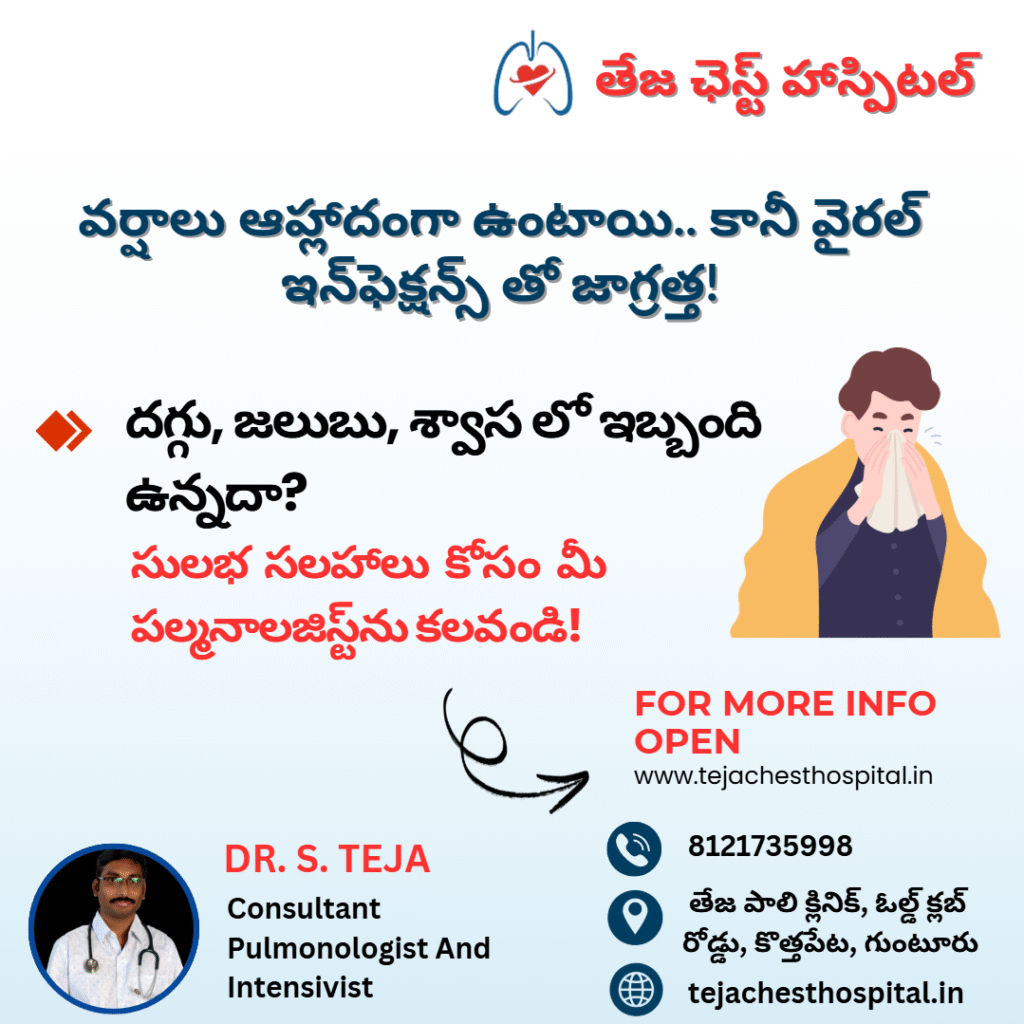
The arrival of monsoon brings relief from summer heat, but also increases respiratory infections significantly. As a pulmonologist in India, I’ve observed how rainy seasons create perfect conditions for viral outbreaks affecting our lungs.
Why Monsoon Increases Infections
High Humidity: The 80-90% humidity levels help viruses survive longer on surfaces and in air. Influenza viruses can live up to 48 hours on moist surfaces compared to just hours on dry ones.
Temperature Fluctuations: Day-night temperature changes weaken our immune defenses, making us more vulnerable to infections.
Indoor Crowding: People spend more time indoors during rains, facilitating virus transmission through close contact.
The Numbers Don’t Lie
Recent hospital data reveals alarming trends:
- 30-40% increase in outpatient consultations during monsoon
- 40-50% rise in viral fever cases during July-August
- 20% increase in overall respiratory ailments during monsoon season
- 13.3% increase in respiratory tract infections compared to summer months
Common Monsoon Infections
Viral Fever
Symptoms include high temperature, body aches, fatigue, and general weakness lasting 3-7 days.
Respiratory Viral Infections
- H3N2 influenza showing particular prominence
- Rhinoviruses and enteroviruses account for 21.5% of monsoon respiratory viruses
- RSV cases requiring ICU admissions have increased dramatically
Upper Respiratory Tract Infections
Over 100 viruses from the Coryza family cause common colds with runny nose, cough, sore throat, and sneezing.
Who’s Most at Risk?
- Children and elderly with weaker immunity
- Patients with asthma, COPD, diabetes
- People with chronic kidney or liver conditions
Prevention: Your Best Defense
Basic Hygiene
- Wash hands frequently with soap and water
- Cover mouth when coughing or sneezing
- Avoid touching face with unwashed hands
Environmental Control
- Maintain indoor humidity below 50% using dehumidifiers
- Ensure proper ventilation – open windows when possible
- Use air purifiers with HEPA filters to trap allergens
- Prevent water stagnation around your home
Boost Immunity Naturally
- Eat vitamin-rich foods, especially Vitamin C and D
- Stay adequately hydrated
- Get 7-8 hours of quality sleep
- Exercise regularly indoors during heavy rains
Smart Lifestyle Choices
- Avoid crowded, poorly ventilated spaces
- Wear appropriate rain gear to stay dry
- Keep indoor temperatures comfortable
When to See a Pulmonologist
Don’t ignore these warning signs:
- Persistent cough lasting over a week
- Shortness of breath during daily activities
- Chest pain or tightness
- Wheezing or whistling sounds while breathing
- Unusual fatigue after minimal exertion
Special Advice for Asthma & COPD Patients
- Keep rescue inhalers readily available
- Monitor peak flow readings more frequently
- Take prescribed medications regularly
- Avoid exposure to mold and dampness
- Consider air conditioning to control humidity
The Bigger Picture
With 18 million Indians suffering from asthma and respiratory diseases being the second leading cause of death, monsoon prevention becomes crucial for public health. The good news? Most infections are preventable with simple precautions.
Key Takeaways
The monsoon season doesn’t have to mean inevitable illness. By understanding the risks and taking proactive steps, you can enjoy the rains while keeping your lungs healthy. Remember, prevention is always better than treatment.
Stay dry, stay healthy, and breathe easy this monsoon season!
Dr. S. Teja, MD Pulmonology
Teja Polyclinic, Guntur
వర్షాకాలం & వైరల్ ఇన్ఫెక్షన్లు: ఒక పల్మొనాలజిస్ట్ (ఊపిరితిత్తుల నిపుణుల) గైడ్
వర్షాకాలం రాక వేసవి తాపం నుండి ఉపశమనం కలిగిస్తుంది, కానీ అదే సమయంలో శ్వాసకోశ ఇన్ఫెక్షన్లను కూడా గణనీయంగా పెంచుతుంది. ఒక పల్మొనాలజిస్ట్గా, వర్షాకాలం మన ఊపిరితిత్తులను ప్రభావితం చేసే వైరల్ వ్యాధులు వ్యాప్తి చెందడానికి ఎలా సరైన పరిస్థితులను సృష్టిస్తుందో నేను గమనించాను.
వర్షాకాలంలో ఇన్ఫెక్షన్లు ఎందుకు పెరుగుతాయి?
- అధిక తేమ: గాలిలో 80−90% వరకు ఉండే తేమ శాతం, వైరస్లు ఉపరితలాలపై మరియు గాలిలో ఎక్కువ కాలం జీవించడానికి సహాయపడుతుంది. ఉదాహరణకు, ఇన్ఫ్లుఎంజా వైరస్లు పొడి ఉపరితలాలపై కొన్ని గంటలు మాత్రమే జీవిస్తే, తడి ఉపరితలాలపై 48 గంటల వరకు జీవించగలవు.
- ఉష్ణోగ్రతలో హెచ్చుతగ్గులు: పగలు మరియు రాత్రి ఉష్ణోగ్రతలలోని మార్పులు మన రోగనిరోధక శక్తిని బలహీనపరుస్తాయి, తద్వారా మనం ఇన్ఫెక్షన్లకు సులభంగా గురవుతాము.
- ఇళ్లలో గుంపులుగా ఉండటం: వర్షాల కారణంగా ప్రజలు ఎక్కువ సమయం ఇళ్లలోనే గడుపుతారు. దీనివల్ల వైరస్ వ్యాప్తి సులభం అవుతుంది.
గణాంకాలు చెబుతున్న నిజాలు
ఇటీవలి ఆసుపత్రి డేటా ఆందోళన కలిగించే ధోరణులను వెల్లడిస్తుంది:
- గత ఏడాదితో పోలిస్తే, ఈ వర్షాకాలంలో శ్వాసకోశ ఇన్ఫెక్షన్లు 30−40% పెరిగాయి.
- ఆసుపత్రిలో చేరే కేసులలో దాదాపు 60% మంది పిల్లలు మరియు వృద్ధులే.
- ప్రతి 10 కేసులలో 7 వైరల్ మూలాలను కలిగి ఉన్నాయి, ముఖ్యంగా ఇన్ఫ్లుఎంజా మరియు రెస్పిరేటరీ సిన్సిటియల్ వైరస్ (RSV).
సాధారణ వర్షాకాల ఇన్ఫెక్షన్లు
- వైరల్ జ్వరం
- లక్షణాలు: అధిక జ్వరం, ఒళ్లు నొప్పులు, అలసట, మరియు సాధారణ బలహీనత 3−7 రోజుల పాటు ఉంటాయి.
- శ్వాసకోశ వైరల్ ఇన్ఫెక్షన్లు
- ఇన్ఫ్లుఎంజా (ఫ్లూ): ఆకస్మికంగా అధిక జ్వరం, తీవ్రమైన ఒళ్లు నొప్పులు, తలనొప్పి, పొడి దగ్గు మరియు గొంతు నొప్పి వంటివి దీని లక్షణాలు.
- రెస్పిరేటరీ సిన్సిటియల్ వైరస్ (RSV): ఇది పిల్లలలో మరియు వృద్ధులలో తీవ్రమైన ఊపిరితిత్తుల ఇన్ఫెక్షన్లకు (బ్రోన్కియోలైటిస్, న్యుమోనియా) ప్రధాన కారణం.
- ఎగువ శ్వాసకోశ ఇన్ఫెక్షన్లు (Upper Respiratory Tract Infections): కొరిజా (Coryza) కుటుంబానికి చెందిన 100కు పైగా వైరస్ల వల్ల సాధారణ జలుబు వస్తుంది. దీని లక్షణాలు ముక్కు కారడం, దగ్గు, గొంతు నొప్పి మరియు తుమ్ములు.
ఎవరికి ఎక్కువ ప్రమాదం?
- పిల్లలు (5 సంవత్సరాల కంటే తక్కువ వయస్సు ఉన్నవారు)
- వృద్ధులు (65 సంవత్సరాల కంటే ఎక్కువ వయస్సు ఉన్నవారు)
- గర్భిణీ స్త్రీలు
- మధుమేహం, గుండె జబ్బులు లేదా కిడ్నీ వ్యాధులు వంటి దీర్ఘకాలిక ఆరోగ్య సమస్యలు ఉన్నవారు.
నివారణ: మీ ఉత్తమ రక్షణ
- ప్రాథమిక పరిశుభ్రత
- తరచుగా చేతులు కడుక్కోవడం: సబ్బు మరియు నీటితో కనీసం 20 సెకన్ల పాటు చేతులు కడుక్కోండి.
- ముఖాన్ని తాకవద్దు: కళ్ళు, ముక్కు మరియు నోటిని తాకడం మానుకోండి.
- దగ్గేటప్పుడు, తుమ్మేటప్పుడు జాగ్రత్త: మోచేతిని అడ్డుపెట్టుకుని లేదా టిష్యూ ఉపయోగించి దగ్గండి లేదా తుమ్మండి.
- పర్యావరణ నియంత్రణ
- వెంటిలేషన్: ఇంట్లో గాలి, వెలుతురు బాగా వచ్చేలా చూసుకోండి.
- ఉపరితలాలను శుభ్రపరచడం: తరచుగా తాకే ఉపరితలాలను (డోర్ నాబ్స్, స్విచ్లు) క్రిమిసంహారకాలతో శుభ్రం చేయండి.
- నీరు నిల్వ ఉండకుండా చూడండి: దోమల వ్యాప్తిని అరికట్టడానికి ఇంటి పరిసరాల్లో నీరు నిల్వ ఉండకుండా చూసుకోండి.
- సహజంగా రోగనిరోధక శక్తిని పెంచుకోండి
- సమతుల్య ఆహారం: విటమిన్ సి అధికంగా ఉండే పండ్లు, కూరగాయలు మరియు జింక్ అధికంగా ఉండే ఆహారాలు తీసుకోండి.
- హైడ్రేషన్: రోజంతా తగినంత నీరు మరియు గోరువెచ్చని ద్రవాలు త్రాగండి.
- తగినంత నిద్ర: రోజుకు 7−8 గంటల నిద్ర రోగనిరోధక శక్తికి చాలా అవసరం.
- ఒత్తిడిని తగ్గించుకోండి: యోగా లేదా ధ్యానం వంటివి ఒత్తిడిని తగ్గించడంలో సహాయపడతాయి.
- తెలివైన జీవనశైలి ఎంపికలు
- తడవకుండా ఉండండి: రెయిన్కోట్ లేదా గొడుగు వాడండి. తడి బట్టలను వెంటనే మార్చుకోండి.
- బయటి ఆహారాన్ని నివారించండి: కలుషితమైన ఆహారం, నీటి ద్వారా వచ్చే ఇన్ఫెక్షన్లను నివారించండి.
- మాస్క్ ధరించండి: రద్దీగా ఉండే ప్రదేశాలలో మాస్క్ ధరించడం వల్ల రక్షణ లభిస్తుంది.
పల్మొనాలజిస్ట్ను ఎప్పుడు సంప్రదించాలి?
ఈ హెచ్చరిక సంకేతాలను విస్మరించవద్దు:
- 3 రోజుల కంటే ఎక్కువ కాలం ఉండే అధిక జ్వరం.
- శ్వాస తీసుకోవడంలో ఇబ్బంది లేదా గురక.
- రెండు వారాలకు పైగా తగ్గని దగ్గు.
- ఛాతీ నొప్పి లేదా ఒత్తిడిగా అనిపించడం.
- పెదవులు లేదా ముఖం నీలిరంగులోకి మారడం.
ఆస్తమా & COPD రోగులకు ప్రత్యేక సలహా
- ఇన్హేలర్లను సిద్ధంగా ఉంచుకోండి: మీ రెస్క్యూ మరియు కంట్రోలర్ ఇన్హేలర్లను ఎల్లప్పుడూ అందుబాటులో ఉంచుకోండి.
- ట్రిగ్గర్లను నివారించండి: తేమ, చల్లని గాలి మరియు అలెర్జీ కారకాలకు దూరంగా ఉండండి.
- యాక్షన్ ప్లాన్ను అనుసరించండి: మీ డాక్టర్ సూచించిన చికిత్సా ప్రణాళికను క్రమం తప్పకుండా పాటించండి. లక్షణాలు తీవ్రమైతే వెంటనే వైద్య సహాయం తీసుకోండి.
విస్తృత దృక్పథం
భారతదేశంలో 10 కోట్ల మంది ఆస్తమాతో బాధపడుతున్నారు మరియు మరణాలకు శ్వాసకోశ వ్యాధులు రెండవ ప్రధాన కారణంగా ఉన్నాయి. ఈ నేపథ్యంలో వర్షాకాలంలో నివారణ చర్యలు తీసుకోవడం ప్రజారోగ్యం దృష్ట్యా చాలా కీలకం. శుభవార్త ఏమిటంటే? చాలా ఇన్ఫెక్షన్లను సాధారణ జాగ్రత్తలతో నివారించవచ్చు.
గుర్తుంచుకోవలసిన ముఖ్య విషయాలు
వర్షాకాలం అంటే అనారోగ్యం తప్పదని కాదు. ప్రమాదాలను అర్థం చేసుకుని, ముందు జాగ్రత్త చర్యలు తీసుకోవడం ద్వారా, మీరు మీ ఊపిరితిత్తులను ఆరోగ్యంగా ఉంచుకుంటూ వర్షాలను ఆస్వాదించవచ్చు. గుర్తుంచుకోండి, చికిత్స కంటే నివారణ ఎల్లప్పుడూ ఉత్తమం.
ఈ వర్షాకాలంలో తడవకుండా ఉండండి, ఆరోగ్యంగా ఉండండి మరియు సులభంగా శ్వాస పీల్చుకోండి!
డా. ఎస్. తేజ, MD పల్మొనాలజీ
తేజ పాలిక్లినిక్, గుంటూరు