
Understanding Breathlessness in Diabetes: Causes and What You Need to Know
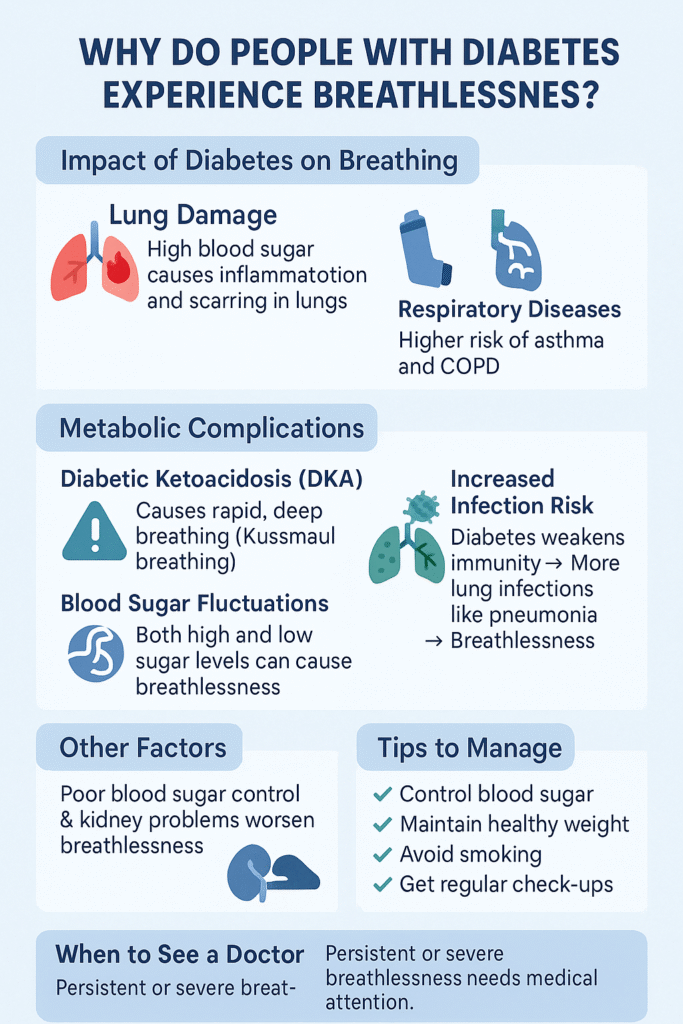
Breathlessness, or difficulty in breathing, can be a worrying symptom—especially if you have diabetes. Many people with diabetes experience shortness of breath at some point, but why does this happen? In this article, we’ll explore the common causes of breathlessness in diabetes and how you can recognize and manage this condition.How Does Diabetes Affect Breathing?Diabetes is often thought of as a disease affecting blood sugar levels, but it can also impact your lungs and breathing in several ways:1. Impact on Lung FunctionHigh blood sugar levels over time can cause inflammation and damage to lung tissues and nerves. This damage reduces lung capacity and efficiency, making breathing more difficult. Additionally, people with diabetes are more prone to respiratory conditions like asthma and chronic obstructive pulmonary disease (COPD), which can further contribute to breathlessness.2. Metabolic ComplicationsOne of the serious complications of diabetes is diabetic ketoacidosis (DKA). In DKA, the body produces high levels of acids called ketones, which can cause rapid and deep breathing (known as Kussmaul breathing) as the body tries to correct the acid imbalance. This leads to noticeable breathlessness and requires urgent medical attention.Even fluctuations in blood sugar—whether too high (hyperglycemia) or too low (hypoglycemia)—can cause feelings of breathlessness.3. Increased Risk of Lung InfectionsDiabetes weakens the immune system, making infections like pneumonia more common and severe. Lung infections can cause inflammation and fluid buildup, leading to difficulty in breathing. 4. Other Contributing FactorsPoor blood sugar control (high HbA1c levels) and kidney problems (nephropathy) are linked to increased breathlessness.Obesity, common in type 2 diabetes, can restrict lung expansion.Sleep apnea—a condition where breathing repeatedly stops during sleep—is more prevalent in people with diabetes and causes daytime breathlessness and fatigue. When to See a DoctorIf you experience persistent or worsening breathlessness, especially if accompanied by chest pain, dizziness, or swelling in your legs, seek medical help immediately. Early diagnosis and treatment can prevent serious complications. Tips to Manage Breathlessness in Diabetes Maintain good blood sugar control through diet, exercise, and medication.Get regular check-ups to monitor lung and kidney health.Avoid smoking and exposure to pollutants.Manage weight and seek treatment if you have sleep apnea.Stay up-to-date with vaccinations to prevent respiratory infections. Breathlessness in diabetes can be caused by various factors, but with proper care and timely medical attention, you can manage and reduce its impact on your quality of life. Stay informed, stay healthy! డయాబెటిస్ వల్ల ఆయాసం: కారణాలు మరియు తెలుసుకోవాల్సిన విషయాలుఆయాసం (Breathlessness) అనేది చాలా మందిలో కలిగే ఆందోళనకరమైన లక్షణం, ముఖ్యంగా డయాబెటిస్ ఉన్నవారిలో. ఎందుకు డయాబెటిస్ ఉన్నవారికి ఆయాసం ఎక్కువగా వస్తుంది? ఈ ఆర్టికల్లో, డయాబెటిస్ ఉన్నవారిలో ఆయాసానికి ముఖ్యమైన కారణాలు, వాటిని గుర్తించటం, నిర్వహించటం గురించి తెలుసుకుందాం.డయాబెటిస్ ఆయాసంపై ఎలా ప్రభావం చూపుతుంది?డయాబెటిస్ అనేది కేవలం రక్తంలో చక్కెర స్థాయిలను ప్రభావితం చేసే వ్యాధి మాత్రమే కాదు; ఇది ఊపిరితిత్తులు, శ్వాస వ్యవస్థపై కూడా ప్రభావం చూపిస్తుంది.1. ఊపిరితిత్తుల పనితీరుపై ప్రభావంరక్తంలో చక్కెర స్థాయిలు ఎక్కువగా ఉండటం వల్ల ఊపిరితిత్తుల కణజాలంలో వాపు, నరాల దెబ్బతినడం, ముడతలు ఏర్పడతాయి. దీని వల్ల ఊపిరితిత్తుల సామర్థ్యం తగ్గిపోతుంది, శ్వాస తీసుకోవడం కష్టతరంగా మారుతుంది. అంతేకాకుండా, డయాబెటిస్ ఉన్నవారిలో ఆస్థమా, COPD (క్రానిక్ ఆబ్స్ట్రక్టివ్ పల్మనరీ డిసీజ్) వంటి శ్వాస సంబంధిత వ్యాధులు వచ్చే అవకాశం ఎక్కువ. ఇవన్నీ ఆయాసానికి దారితీస్తాయి.2. మెటబాలిక్ సమస్యలుడయాబెటిస్లో తీవ్రమైన సమస్యగా డయాబెటిక్ కీటో ఆసిడోసిస్ (DKA) ఉంటుంది. ఈ పరిస్థితిలో శరీరంలో ఆమ్లాలు (కీటోన్స్) పెరిగిపోతాయి, శరీరం ఆ ఆమ్లాన్ని తగ్గించేందుకు వేగంగా, లోతుగా ఊపిరి తీసుకుంటుంది (Kussmaul శ్వాస). ఇది తీవ్రమైన ఆయాసానికి కారణమవుతుంది.అలాగే, రక్తంలో చక్కెర స్థాయిలు ఎక్కువగా (హైపర్గ్లైసీమియా) లేదా తక్కువగా (హైపోగ్లైసీమియా) ఉన్నప్పటికీ ఆయాసం రావచ్చు.3. శ్వాసకోశ ఇన్ఫెక్షన్లుడయాబెటిస్ ఉన్నవారిలో రోగనిరోధక శక్తి తగ్గిపోతుంది. అందువల్ల న్యూమోనియా వంటి ఊపిరితిత్తుల ఇన్ఫెక్షన్లు ఎక్కువగా వస్తాయి. ఇవి ఊపిరితిత్తుల వాపు, ద్రవం చేరడం వల్ల ఆయాసాన్ని పెంచుతాయి. 4. ఇతర కారణాలురక్తంలో చక్కెర నియంత్రణ (HbA1c ఎక్కువగా ఉండటం), మూత్రపిండాల సమస్యలు (నెఫ్రోపతి) ఉన్నవారిలో ఆయాసం ఎక్కువగా కనిపిస్తుంది.స్థూలకాయం (ఒబెసిటీ), నిద్రలో ఊపిరి ఆగిపోవడం (స్లీప్ అప్నియా) వంటి సమస్యలు కూడా ఊపిరితిత్తి పనితీరును తగ్గించి ఆయాసాన్ని పెంచుతాయి. ఎప్పుడు డాక్టర్ను సంప్రదించాలి?మీకు ఆయాసం నిరంతరం లేదా తీవ్రముగా ఉంటే, ముఖ్యంగా ఛాతిలో నొప్పి, తలనొప్పి, కాళ్లలో వాపు వంటి ఇతర లక్షణాలు ఉంటే వెంటనే వైద్యుడిని సంప్రదించండి. త్వరితంగా చికిత్స తీసుకుంటే తీవ్రమైన సమస్యలను నివారించవచ్చు. డయాబెటిస్లో ఆయాసాన్ని తగ్గించేందుకు చిట్కాలు డైట్, వ్యాయామం, మందులతో రక్తంలో చక్కెరను నియంత్రించండి. ఊపిరితిత్తులు, మూత్రపిండాల ఆరోగ్యాన్ని క్రమం తప్పకుండా పరీక్షించుకోండి. పొగ త్రాగడం, కాలుష్యాన్ని నివారించండి. బరువు నియంత్రించండి, స్లీప్ అప్నియా ఉంటే చికిత్స తీసుకోండి. శ్వాసకోశ ఇన్ఫెక్షన్లను నివారించేందుకు టీకాలు వేయించుకోండి. డయాబెటిస్ ఉన్నవారిలో ఆయాసం అనేక కారణాల వల్ల కలుగుతుంది. సరైన జాగ్రత్తలు, వైద్యసలహాతో దీన్ని నియంత్రించవచ్చు. ఆరోగ్యంగా ఉండండి, అప్రమత్తంగా ఉండండి!
Top Myths About Asthma (And the Facts!) 🚫 Asthma Myth Busted! 🚫
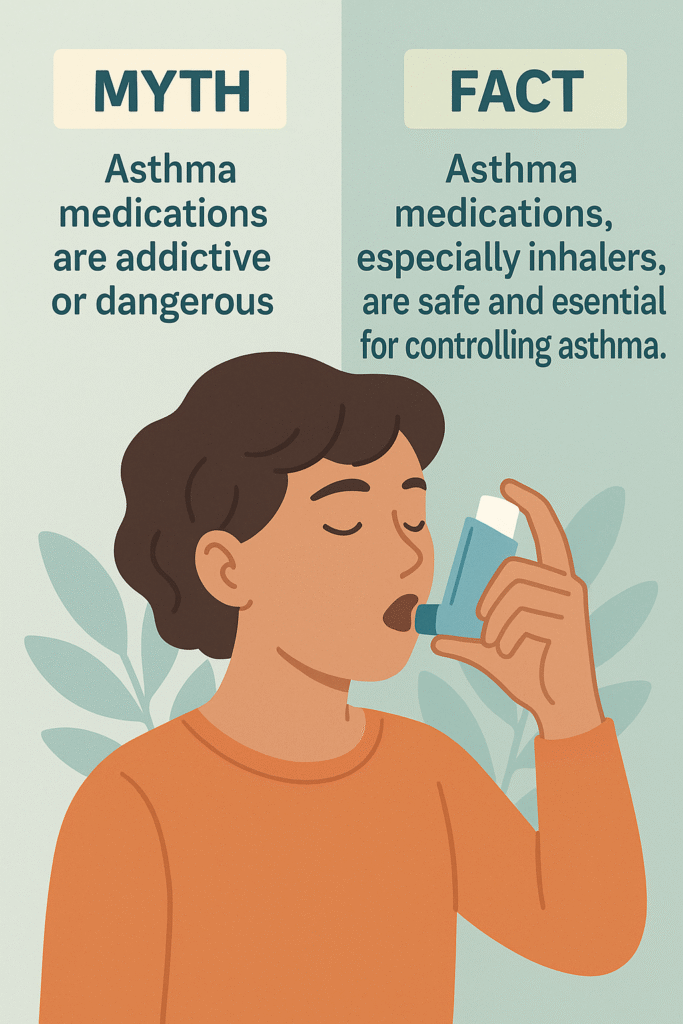
Top Myths About Asthma (And the Facts!) Myth 1: Asthma is only a childhood disease and you can outgrow it.Fact: Asthma can develop at any age and is a lifelong condition for many. While some children may see symptoms decrease, many continue to have asthma as adults, and some are diagnosed later in life. Myth 2: People with asthma shouldn’t exercise or play sports.Fact: People with asthma are encouraged to stay active! Exercise can actually improve lung function and overall health. With proper management, most people with asthma can participate fully in sports and physical activities. Myth 3: Asthma medications, especially inhalers, are addictive or dangerous.Fact: Asthma medications are not habit-forming. Inhalers and other prescribed treatments are safe and essential for controlling asthma. Long-term use, as directed by a doctor, helps prevent attacks and keeps lungs healthy. Myth 4: Asthma is a psychological or “in your head” disease.Fact: Asthma is a real, physical condition involving inflammation of the airways. It is not caused by emotional factors, though stress can sometimes trigger symptoms. Myth 5: Asthma can be cured permanently.Fact: There is currently no cure for asthma, but it can be effectively managed. With the right treatment and lifestyle adjustments, people with asthma can lead healthy, active lives. Myth 6: Inhalers should only be used during an asthma attack.Fact: Many inhalers are meant for daily use to prevent symptoms, not just for emergencies. Regular use as prescribed helps avoid long-term lung damage and severe attacks. Myth 7: Asthma symptoms are the same for everyone.Fact: Asthma symptoms can vary widely between individuals. Some may experience wheezing, others may have chest tightness, coughing, or shortness of breath. Understanding your unique symptoms is key to good asthma management. Myth 8: Pets, dairy, or air conditioning always make asthma worse.Fact: Triggers differ from person to person. Some people with asthma live comfortably with pets or eat dairy without issues. Identifying and managing your personal triggers is important. ఆస్థమా గురించి సాధారణ అపోహలు (మరియు వాస్తవాలు!) అపోహ 1: ఆస్థమా చిన్నపిల్లల్లో మాత్రమే వస్తుంది, పెద్దయ్యాక పోతుంది.వాస్తవం: ఆస్థమా ఏ వయసులోనైనా రావచ్చు. కొంతమందిలో చిన్నప్పట్లో లక్షణాలు తగ్గిపోవచ్చు కానీ చాలా మందిలో ఇది జీవితాంతం ఉంటుంది. కొంతమందికి పెద్దయ్యాక కూడా ఆస్థమా మొదలవుతుంది. అపోహ 2: ఆస్థమా ఉన్నవారు వ్యాయామం చేయకూడదు, క్రీడల్లో పాల్గొనకూడదు.వాస్తవం: ఆస్థమా ఉన్నవారు కూడా వ్యాయామం చేయాలి! సరైన మందులతో మరియు జాగ్రత్తలతో క్రీడలు, వ్యాయామాలు చేయవచ్చు. ఇది ఆరోగ్యాన్ని మెరుగుపరచడంలో సహాయపడుతుంది. అపోహ 3: ఆస్థమా మందులు, ముఖ్యంగా ఇన్హేలర్లు, అలవాటు పడేలా చేస్తాయి లేదా ప్రమాదకరం.వాస్తవం: ఆస్థమా మందులు అలవాటు పడేలా చేయవు. డాక్టర్ సూచించిన విధంగా ఇన్హేలర్లు వాడటం సురక్షితం మరియు అవసరం. దీర్ఘకాలం వాడినా ప్రమాదం లేదు. అపోహ 4: ఆస్థమా మానసిక వ్యాధి లేదా “మనసులోనే” ఉండే వ్యాధి.వాస్తవం: ఆస్థమా శరీరంలో వాయు మార్గాల్లో ఏర్పడే వాపు వల్ల వస్తుంది. ఇది మానసిక సమస్య కాదు, కానీ ఒత్తిడితో లక్షణాలు పెరగొచ్చు. అపోహ 5: ఆస్థమా పూర్తిగా నయం చేయవచ్చు.వాస్తవం: ఆస్థమాకు శాశ్వతమైన చికిత్స లేదు. కానీ సరైన మందులు, జీవనశైలి మార్పులతో ఆస్థమాను పూర్తిగా నియంత్రించవచ్చు. అపోహ 6: ఇన్హేలర్ను కేవలం ఆస్థమా దాడి వచ్చినప్పుడు మాత్రమే వాడాలి.వాస్తవం: చాలా ఇన్హేలర్లు రోజూ వాడటానికి ఉంటాయి, కేవలం అత్యవసర సమయంలో కాదు. రెగ్యులర్గా వాడితే ఆస్థమా దాడులను నివారించవచ్చు. అపోహ 7: ఆస్థమా లక్షణాలు అందరిలో ఒకేలా ఉంటాయి.వాస్తవం: ఆస్థమా లక్షణాలు వ్యక్తి వ్యక్తికి మారుతాయి. కొంతమందికి ఊపిరి తడిపోవడం, మరికొందరికి దగ్గు, ఛాతీలో బరువు వంటివి ఉంటాయి. అపోహ 8: పెంపుడు జంతువులు, పాల పదార్థాలు, ఎయిర్ కండిషనర్లు ఆస్థమాను తప్పకుండా పెంచుతాయి.వాస్తవం: ప్రతి ఒక్కరికి ట్రిగ్గర్లు వేరు వేరు. కొంతమందికి పెంపుడు జంతువులతో, పాల పదార్థాలతో ఎలాంటి సమస్య ఉండకపోవచ్చు. మీ ట్రిగ్గర్లను గుర్తించుకుని వాటిని నివారించాలి.