
Reusing Disposable Masks: Risks, Safety Tips, and Lung Health


Reusing Disposable Masks: Risks, Safety Tips, and Lung Health
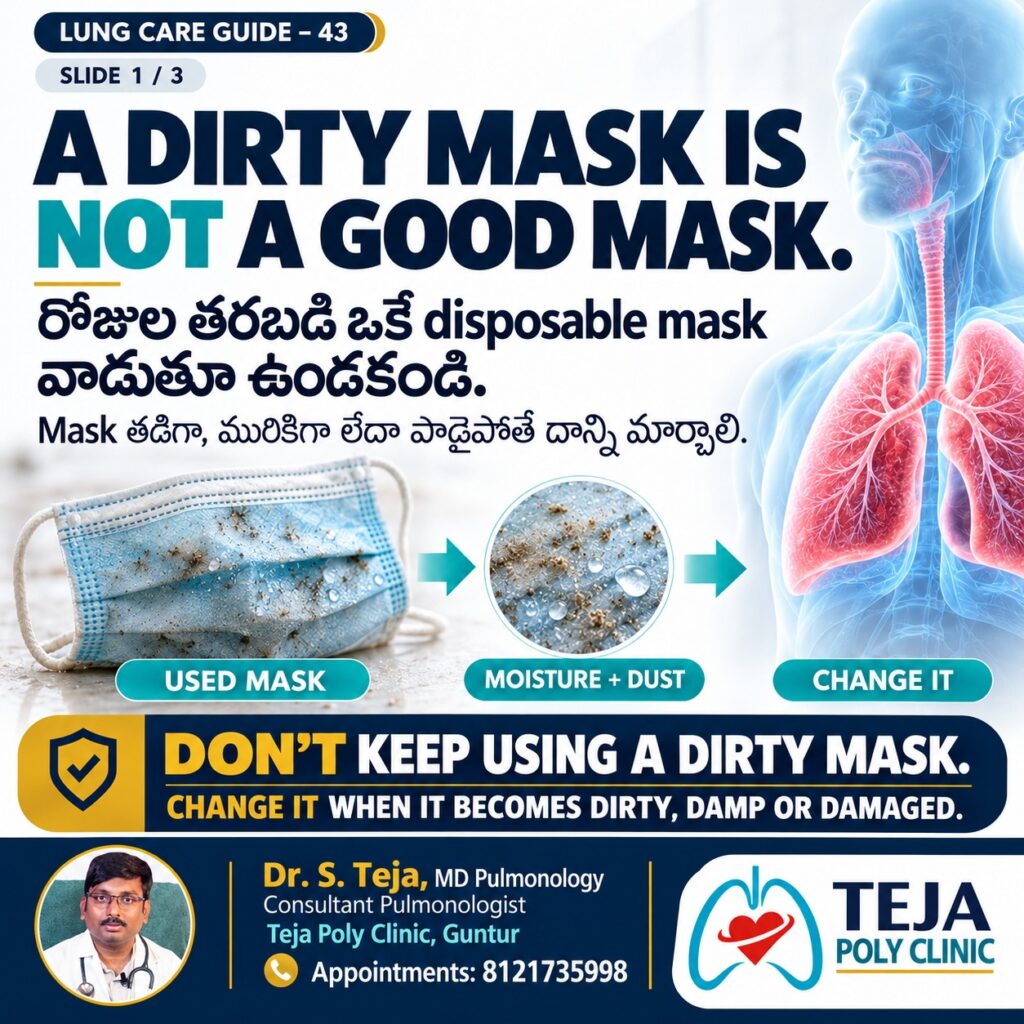
Reusing Disposable Masks for several days may seem convenient, but it is not a good hygiene practice. Face masks help reduce exposure to respiratory droplets, infectious particles, and certain airborne pollutants when used correctly. However, disposable surgical masks are primarily designed for single use and should not be treated like reusable cloth masks.
Understanding when to replace your mask, how to handle a used mask, and how to dispose of it properly can help you maintain good respiratory hygiene.
If you are concerned about respiratory health, consulting a Pulmonologist in Guntur can help you understand the appropriate precautions based on your health condition and exposure risks.
Why Is Reusing Disposable Masks Not Recommended?
Disposable surgical masks can collect moisture from breathing, skin oils, respiratory droplets, dust, and environmental particles during use. Repeated handling and improper storage may also contaminate the mask.
When a disposable mask becomes wet, visibly dirty, damaged, or difficult to breathe through, it should be replaced immediately. Prolonged use without proper replacement can compromise hygiene and may affect the mask’s performance.
Although every reused mask does not automatically cause an infection, reusing disposable masks for several days is not recommended. Always follow the manufacturer’s instructions for safe use and disposal.
Can Reusing Disposable Masks Increase the Risk of Respiratory Infections?
Masks can collect microorganisms and particles from the surrounding environment. Touching a contaminated mask and then touching your eyes, nose, or mouth may contribute to the spread of germs.
However, it is important to understand that a reused mask does not automatically cause a respiratory infection. The potential risk depends on factors such as mask condition, handling, storage, and environmental exposure.
To reduce unnecessary risks, avoid repeatedly touching the front surface of your mask. Wash or sanitize your hands after handling a used mask, and replace disposable masks according to the recommended guidelines.
If you experience persistent coughing, breathing difficulties, or other respiratory symptoms, consult a qualified doctor for appropriate evaluation.
How Often Should You Change Your Mask?
Knowing when to replace your mask is an important part of respiratory hygiene. The recommended approach depends on the type of mask you use.
1. Disposable Surgical Masks
Disposable surgical masks are intended primarily for single use. Discard them after use and replace them sooner if they become wet, dirty, damaged, or difficult to breathe through.
Avoid washing or disinfecting disposable surgical masks for routine reuse, as this can damage their filtration properties.
2. Reusable Cloth Masks
Unlike disposable masks, cloth masks can be washed and reused. Wash them with detergent after each use and allow them to dry completely before wearing them again.
Replace cloth masks that become damaged, stretched, or difficult to clean properly.
3. N95 Respirators
N95 respirators offer a different level of respiratory protection from ordinary surgical masks when properly fitted and used. Follow the manufacturer’s instructions and applicable healthcare or workplace guidance regarding reuse and replacement.
Do not assume that the rules for disposable surgical masks automatically apply to N95 respirators.
How Should You Dispose of a Used Disposable Mask?
Proper disposal is another important aspect of mask hygiene. Follow these steps when removing and discarding a disposable mask:
Remove the mask using its ear loops or ties.
Avoid touching the front surface unnecessarily.
Place the used mask in an appropriate waste bin, following local waste-disposal guidance.
Clean your hands after handling the used mask.
Never share masks with other people.
Do not wash, apply alcohol to, or heat disposable surgical masks to prepare them for routine reuse. These methods can damage the mask’s structure and filtration performance.
Do Masks Help Protect Your Lung Health?
Correctly selected and properly worn masks can help reduce exposure to infectious respiratory particles and certain airborne pollutants. Their effectiveness depends on the type of mask, filtration efficiency, fit, and consistency of use.
People with asthma, COPD, or other chronic respiratory conditions may need individualized advice about mask selection and use, particularly in crowded indoor environments or areas with poor air quality.
For personalized respiratory guidance, consulting a Pulmonologist in Guntur can help you understand suitable protective measures based on your symptoms, medical history, and daily environment.
When Should You Consult a Pulmonologist in Guntur?
Consider seeking medical advice if you experience:
Persistent coughing or wheezing.
Shortness of breath that is new or worsening.
Repeated respiratory infections.
Breathing discomfort associated with dust, smoke, or air pollution.
Concerns about managing asthma or COPD in crowded environments.
Severe or sudden breathing difficulty requires urgent medical attention.
Conclusion: Avoid Reusing Disposable Masks for Days
Reusing Disposable Masks for several days is not recommended. Disposable surgical masks should generally be discarded after use, while reusable cloth masks should be washed after each use. N95 respirators require separate handling and replacement guidance.
Maintaining proper mask hygiene, choosing an appropriate mask, and disposing of it correctly can support better respiratory protection.
For expert advice on lung health, asthma, COPD, and respiratory protection, consult Dr. S. Teja, MD Pulmonology, at Teja Poly Clinic, Guntur.
Doctor: Dr. S. Teja, MD Pulmonology
Clinic: Teja Poly Clinic, Guntur
Appointments: 8121735998
Protect your breathing by choosing the right mask and using it correctly.