
Obesity and Breathing Problems: How Excess Weight Affects Your Lungs
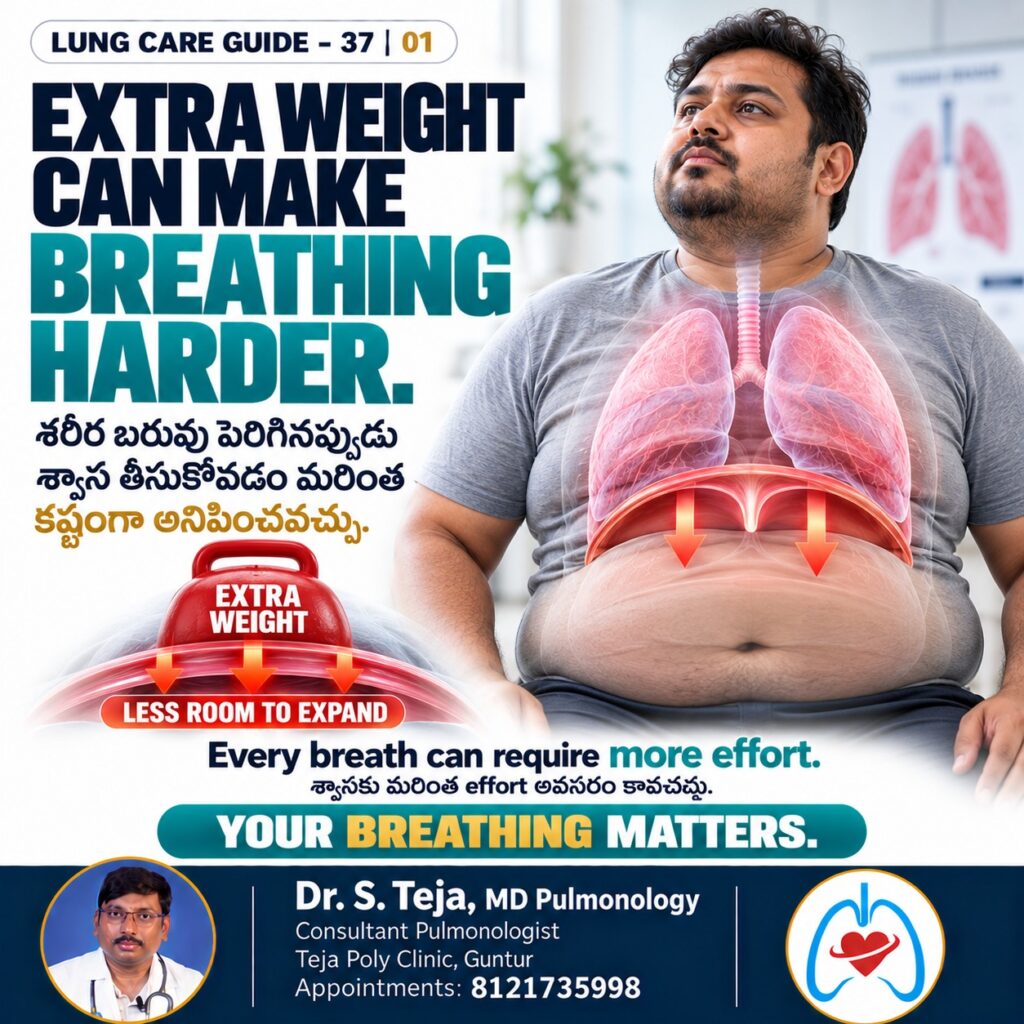


Obesity and Breathing Problems: How Excess Weight Affects Your Lungs
Can obesity cause breathing problems? Yes. Being overweight or obese can affect the way your lungs, chest wall, and diaphragm work, making breathing more difficult. Obesity and breathing problems are often linked, particularly during walking, climbing stairs, exercising, or sleeping.
Excess body weight can increase the effort required to breathe and may also raise the risk of conditions such as obstructive sleep apnea, asthma symptoms, and reduced exercise tolerance. Maintaining a healthy weight is therefore important for both respiratory and overall health.
How Does Obesity Affect Breathing?
Breathing depends on the lungs, chest wall, and diaphragm working together efficiently. When there is excess fat around the abdomen and chest, this normal breathing process can become more difficult.
Abdominal fat can push the diaphragm upward, reducing the space available for the lungs to expand. Excess tissue around the chest can also restrict chest-wall movement. As a result, the respiratory muscles may need to work harder with each breath.
This is one reason why obesity and breathing problems can occur even without an underlying lung disease.
Obesity and Shortness of Breath
Shortness of breath is a common symptom associated with excess weight. Physical activities such as walking, climbing stairs, or exercising require more oxygen when the body has greater mass.
At the same time, excess weight can make breathing mechanically less efficient. These factors can combine to cause breathlessness and reduced exercise capacity.
This may create a cycle:
Extra weight → increased breathing effort → less physical activity → reduced fitness → further weight gain
Gradual weight management and regular physical activity, when medically appropriate, can help break this cycle and improve overall fitness.
Can Obesity Reduce Lung Capacity?
Yes. Obesity can reduce certain measures of lung function, particularly functional residual capacity (FRC) and expiratory reserve volume (ERV). These effects can become more noticeable as the degree of obesity increases.
However, not every breathing problem is caused by excess weight. Conditions such as asthma, chronic obstructive pulmonary disease (COPD), heart disease, anemia, and sleep apnea can also cause breathlessness.
Therefore, persistent or unexplained breathing difficulties should be properly evaluated rather than automatically attributed to obesity.
Obesity and Sleep Apnea
One of the important connections between obesity and breathing problems is obstructive sleep apnea (OSA).
Excess weight can increase the risk of narrowing or blockage of the upper airway during sleep. People with sleep apnea may experience:
Loud or frequent snoring
Gasping or choking during sleep
Excessive daytime sleepiness
Morning headaches
Poor concentration
Unrefreshing sleep
If you are overweight and regularly snore or feel unusually tired during the day, speak with a doctor about whether a sleep evaluation may be appropriate.
Can Weight Loss Improve Breathing?
For people who are overweight or obese, gradual and sustainable weight loss may improve breathing comfort, exercise tolerance, and overall fitness. Weight management can also help reduce the severity of obesity-related conditions, including obstructive sleep apnea.
A healthy approach should include a balanced diet, appropriate physical activity, adequate sleep, and professional medical guidance when needed. Crash diets and extreme weight-loss methods are generally not sustainable.
When Should You See a Pulmonologist?
Do not assume that persistent breathlessness is simply due to excess weight. You should seek medical evaluation if you experience:
Persistent or worsening breathlessness
Breathlessness with minimal activity
Chronic cough or wheezing
Reduced exercise capacity
Loud snoring with daytime sleepiness
Recurrent chest infections
Breathlessness with chest pain, dizziness, or fainting
A pulmonologist in Guntur can evaluate your symptoms and determine whether they are related to obesity or another respiratory or medical condition. Depending on your symptoms, evaluation may include spirometry or pulmonary function tests (PFT), chest imaging, oxygen saturation assessment, blood tests, or a sleep study.
The Bottom Line
Obesity and breathing problems can be closely connected. Excess weight can increase the work of breathing, reduce certain lung volumes, decrease exercise tolerance, and increase the risk of sleep apnea.
Healthy weight management and regular physical activity can support better respiratory health. However, persistent or unexplained breathlessness should never be ignored.
If you are experiencing breathing difficulties and need professional evaluation, consult Dr. S Teja, MD Pulmonology, at Teja Poly Clinic, Guntur.
Dr. S Teja, MD Pulmonology
Teja Poly Clinic, Guntur
Appointments: 8121735998